

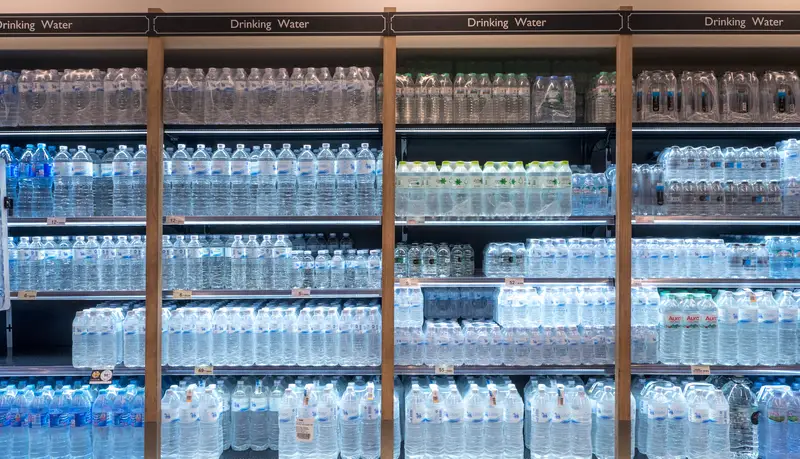
You’re standing in a gas station, staring at a wall of bottled water options, and you grab the one that looks cleanest. Maybe it has a mountain on the label. Maybe it says “purified” in a nice font. You pay $2.50, twist the cap, and feel like you’re making a healthy choice. Here’s the thing, though — there’s a decent chance the water in that bottle came from the same place as the water in your kitchen sink.
According to a study by the Environmental Working Group, roughly 64% of bottled water sold in the United States is sourced from municipal tap water. That’s not a fringe claim or some conspiracy theory. Major brands — names you’d recognize instantly — are filling their bottles from public water supplies, running it through filters, slapping on a label, and charging you hundreds of times more than what it costs from your faucet.
So which brands are doing this? And does it even matter? Let’s get into it.
Aquafina
Aquafina is probably the most well-known offender, mostly because PepsiCo was forced to come clean about it. Back in 2007, after pressure from environmental groups, Pepsi updated the Aquafina label to say the water comes from a “public water source.” That’s corporate speak for tap water. Before that, there was nothing on the bottle telling you where the water actually came from.
To their credit, Aquafina doesn’t just fill a bottle from a faucet and call it a day. The water goes through a purification process that includes reverse osmosis, ultraviolet treatment, and ozone sterilization. PepsiCo says the process exceeds federal purity standards. But the starting material? It’s the same water your city treats and pumps to your house. Aquafina was first distributed in Wichita, Kansas in 1994 and has since become one of the biggest bottled water brands in the country, sold in sizes from 12 ounces to 1.5 liters.
Dasani
Coca-Cola’s answer to Aquafina is Dasani, and it’s the same story with a different logo. Dasani uses local municipal water supplies from states including California, Minnesota, Arizona, Colorado, and Michigan. The water goes through reverse osmosis and nanofiltration, then Coca-Cola adds back trace amounts of minerals — magnesium sulfate (that’s Epsom salt), potassium chloride, and plain old table salt.
Dasani actually had a spectacular embarrassment overseas. In the UK in 2004, it came out that the brand was bottling treated tap water from Sidcup, a town in southeast London. While Coca-Cola never claimed it was spring water, the marketing heavily implied purity. Then, in March 2004, a batch was found contaminated with bromate — a suspected carcinogen — at levels above the legal limit. The whole product was pulled from UK shelves. It hasn’t fully recovered its reputation there since.
Nestle Pure Life
Nestle Pure Life (now just called Pure Life after Nestle sold off its North American water brands) sources its water from both wells and municipal supplies. The problem is there’s no way for you to know which source ended up in your particular bottle. You could be drinking well water or you could be drinking filtered tap water — the label won’t tell you.
Pure Life goes through a filtration process and has minerals added back for taste. In taste tests, though, it doesn’t fare great. Multiple rankings have placed it near the bottom of popular water brands, with reviewers noting the minerals added back into the water give it an off-putting taste. So you’re potentially paying for tap water that actually tastes worse than what comes out of your faucet.
Kirkland Signature (Costco)
Costco’s house brand water is made by Niagara Bottling LLC, one of the largest private label water producers in the country. Niagara sources its water from springs, wells, and municipal water supplies. Just like Pure Life, there’s no transparency about which source goes into which Kirkland bottle. Minerals are added for taste.
If you’re buying the 40-pack at Costco for $4.99, maybe you don’t care that much. At least the price is honest. But it’s still worth knowing that your bargain water might be coming from the same place as the water you use to fill your dog’s bowl.
Propel and Lifewtr
Propel is Gatorade’s flavored water line, and yes, it starts as tap water. The water is purified using reverse osmosis, then electrolytes like sodium bicarbonate, magnesium sulfate, and potassium bicarbonate are added. It comes in flavors like watermelon, lemon, and grape, or you can get it unflavored. People buy it for the electrolytes, not because they think it’s from a glacier. But it’s still municipal water at its core.
Lifewtr, another PepsiCo brand known for its artsy label designs, also comes from municipal reservoirs. Same reverse osmosis treatment, same added electrolytes (magnesium sulfate and potassium bicarbonate). You’re paying for the packaging and the branding. The water started in the same pipes as everything else.
Core Water
Core is interesting because the company actually puts in more work than most tap-water brands. The water starts from municipal sources, but it goes through seven stages of purification — reverse osmosis, micron filtration, carbon filtration, ozonation, and ultraviolet exposure among them. The company claims 99.9% of contaminants are removed.
One thing to note: Core water doesn’t contain fluoride. That mineral gets stripped out during the aggressive purification process. If you’re relying on your drinking water for fluoride (which most dentists recommend), Core isn’t giving it to you. Whether the seven-step process justifies the price tag of roughly $2 per bottle is up to you.
The Brands That Actually Aren’t Tap Water
Not every brand is filling up from the city supply. About 55% of bottled water in the U.S. is spring water, and some brands have built their entire identity around it. Crystal Geyser bottles at the spring source. Arrowhead comes from mountain springs. Fiji Water is pumped from deep wells in the Yaqara Valley, drawing from a groundwater source that formed roughly 2,000 years ago. Ice Mountain sources from natural springs in Michigan.
These brands tend to cost more, but at least the product matches the marketing. When Fiji puts a tropical landscape on their label, the water actually does come from a remote Pacific island. When Aquafina puts a sunrise and the word “pure” on their bottle, the water comes from… wherever the nearest municipal plant is.
Why This Is Allowed
Here’s where it gets frustrating. Your municipal tap water is regulated by the EPA under the Safe Drinking Water Act. That means regular testing, strict limits on contaminants, and public reporting of results. Bottled water? That’s regulated by the FDA as a food product. And the standards are weaker.
Bottled water companies are not required to disclose their water sources, their treatment methods, or the results of contaminant testing. The EWG study that flagged the 64% figure also found that Walmart’s Sam’s Choice and Giant Food’s Acadia brands had contamination levels that exceeded California’s bottled water quality standards. Your tap water has to pass more tests than the bottled stuff does.
The Environmental Cost Nobody Talks About
Most of the big bottling operations are located in California, a state that has dealt with chronic drought for years. While residents face water restrictions — can’t water the lawn, can’t take long showers — companies are pulling from the same municipal supply and selling it back to Americans at a massive markup. In Los Angeles alone, the cost of tap water jumped 71% between 2010 and 2017.
Then there’s the plastic. Research shows 86% of plastic water bottles in the U.S. end up in the trash, not the recycling bin. It takes 17 million barrels of oil per year just to produce all those bottles. And a study of 259 bottles of water found that 93% contained microplastics — so you’re drinking tiny bits of plastic along with your fancy purified tap water.
Dasani tried to address this by rolling out aluminum cans in 2019, but the math doesn’t help much. Producing a single aluminum can generates about 1,300 grams of carbon dioxide, compared to 330 grams for a plastic bottle of the same size.
What You Should Actually Do
If you want to keep buying bottled water, at least be honest with yourself about what you’re getting. Look at the label. If it says “purified” or “vapor-distilled,” it almost certainly started as tap water. If it says “spring water” and lists a specific source location, it probably came from an actual spring.
But the smarter move? Get a decent water filter for your home. A Brita pitcher costs about $25. A good under-sink reverse osmosis system runs $150-300. Either one will give you water that’s just as clean as what Aquafina and Dasani are selling — because it’s going through the same purification process — at a fraction of the cost. You’re basically paying these companies to do what a $25 pitcher can do on your kitchen counter.
The bottled water industry pulls in tens of billions of dollars a year in the United States. A big chunk of that money comes from people who think they’re buying something special when they’re really buying something they already have at home, just wrapped in plastic. Now you know. What you do with that information is up to you.
