

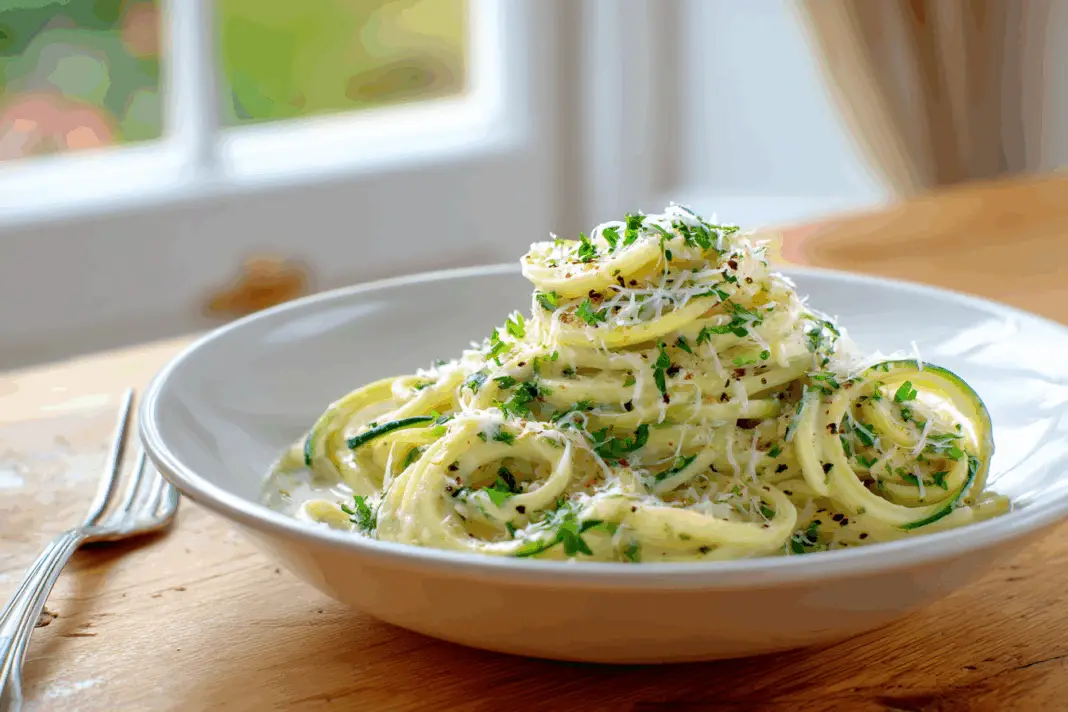
Making dinner on a Tuesday night shouldn’t feel like running a marathon. When you’re tired and hungry, the last thing you want is complicated recipes with long ingredient lists. Zucchini noodles with creamy garlic sauce changes everything because it comes together in about three minutes once you’ve got your zoodles ready. The sauce is rich without being heavy, and you won’t believe how satisfying a plate of vegetables can be when they’re dressed up right.
What makes zucchini noodles actually work
Zucchini noodles seem like they should be a sad substitute for real pasta, but they’re not trying to be pasta at all. They’re their own thing, and once you stop comparing them to spaghetti, you’ll appreciate what they bring to the table. The mild taste means they take on whatever sauce you pair them with, kind of like how tofu works in stir-fries. The main challenge with zoodles is their water content, since zucchini is about 96% water. If you don’t handle this properly, you’ll end up with a watery mess instead of a satisfying meal.
The trick is salting them before cooking. When you toss your spiralized zucchini with salt and let it sit for 15 minutes, the salt draws out moisture through osmosis. After the waiting period, you’ll see a surprising amount of liquid pooled in your bowl. Squeeze the zucchini noodles with your hands to remove even more water, then pat them dry with paper towels. This step makes the difference between soggy noodles and ones that hold up beautifully in your sauce.
Getting your hands on a spiralizer
You can’t really make proper zucchini noodles without some kind of spiralizing tool. The good news is these gadgets are pretty affordable now, with decent ones available on Amazon for around twenty bucks. There are countertop versions that look like little machines with a crank handle, and smaller handheld versions that work more like a pencil sharpener. Both work fine, though the countertop models tend to be sturdier and faster if you’re making zoodles regularly.
If you don’t want to buy another kitchen gadget, you’ve got options. A regular vegetable peeler works in a pinch, though you’ll get flat ribbons instead of round noodles. Run the peeler down the length of the zucchini to create long strips, rotating as you go to avoid the seedy center. Some grocery stores now sell pre-spiralized zucchini in the produce section, which costs more but saves time. When using a spiralizer, you don’t need to peel the zucchini first because the skin softens when cooked and adds color to your dish.
Why this sauce comes together so fast
Traditional cream sauces take forever because you’re usually making a roux with butter and flour, then slowly adding cream while stirring constantly. This recipe skips most of that fuss by using cream cheese as the base. Cream cheese melts quickly and creates a thick, clingy sauce without all the stirring and worrying about lumps. You can use regular brick cream cheese or the spreadable kind in a tub, though spreadable melts even faster because it’s already softer.
The sauce needs just a few ingredients: cream cheese, garlic powder, a splash of milk or cream, and grated Parmesan. Some recipes add a tablespoon of flour to thicken things up, while others use tapioca starch for a gluten-free option. The tapioca starch gives the sauce a slightly stretchy texture that mimics real cheese sauce. Heat your pan with a bit of olive oil, cook your aromatics like shallots or garlic, then stir in your thickener and dairy. The whole sauce comes together in under five minutes.
Cooking zoodles without turning them to mush
The biggest mistake people make with zucchini noodles is overcooking them. You’re not actually cooking them so much as wilting them, similar to how you’d wilt spinach. Two to three minutes in a hot pan is plenty of time. Any longer and they’ll release more water and turn mushy. Think of it like heating them through rather than cooking them completely. They should still have a slight bite when you’re done, not be soft and limp.
Heat your pan over medium-high heat before adding the zoodles. This ensures they cook quickly instead of steaming in their own moisture. Don’t add salt during cooking because that will draw out more water, which is the opposite of what you want after all that prep work. Toss the noodles frequently with tongs so they cook evenly. When they’ve softened slightly and turned bright green, they’re ready for the sauce. If you’re reheating leftovers, do it gently in a pan rather than the microwave to avoid making them watery.
What to add for a complete meal
Plain zucchini noodles with sauce make a nice side dish, but they’re not exactly filling on their own. Protein is the obvious addition. Grilled chicken strips, shrimp, or crispy chickpeas all work great. If you’re adding shrimp, cook them separately in the same pan before making your sauce, then toss them back in at the end. Chickpeas can be roasted with spices until crispy, then sprinkled on top for crunch and protein.
Cherry tomatoes are another smart addition because they add pops of sweetness and acidity that balance the rich sauce. Cut them in half and toss them in right before serving so they stay fresh. Mushrooms, sun-dried tomatoes, or roasted red peppers also work well. Fresh herbs like basil or parsley brighten everything up and make the dish feel more restaurant-quality. A squeeze of lemon juice right before serving adds brightness that keeps the cream sauce from feeling too heavy. Crispy bacon bits or tofu bacon pieces add a smoky element that makes the whole dish more interesting.
Choosing the right zucchini at the store
Not all zucchini are created equal when it comes to making noodles. Look for medium-sized ones that are about the same diameter as a paper towel tube. Really large zucchini tend to be seedy and watery in the middle, which means more moisture problems. Small ones are fine but you’ll need more of them to get enough noodles. The zucchini should feel firm when you squeeze it gently, with no soft spots or wrinkles.
The skin should be smooth and evenly colored, whether you’re buying the dark green variety or the lighter striped kind. Avoid any with nicks or cuts because those spots get mushy faster. Straight zucchini are easier to spiralize than curved ones, though it’s not a dealbreaker. You’ll need about two to three medium zucchini to make enough noodles for two people as a main dish, or four people as a side. Store them in the crisper drawer of your fridge and use them within a few days for best results, since older zucchini get more watery.
Making this work for different diets
The basic recipe is already pretty versatile, but you can tweak it for different eating styles. For a vegan version, swap the cream cheese for a plant-based alternative and use nutritional yeast instead of Parmesan. Cashew cream works well too if you soak cashews and blend them with water until smooth. The sauce won’t be quite as thick, so adding a bit of tapioca starch helps. Use plain, unsweetened soy milk for the best results because it has a neutral taste and creamy texture.
The recipe is naturally gluten-free if you skip the flour or use a gluten-free thickener like cornstarch or tapioca starch. It’s also low-carb and keto-friendly since zucchini noodles have way fewer carbs than regular pasta. One serving of zoodles has about 7 grams of carbs compared to 40-plus grams in regular pasta. If you’re watching calories, the dish clocks in around 170-180 calories per serving, which is reasonable for a meal when you add protein. Using light cream cheese or reducing the amount can cut calories even further without sacrificing too much richness.
Why freezing zoodles is tricky
You might be thinking about making a big batch and freezing portions for later, but zucchini noodles don’t freeze well in their noodle form. The freezing process breaks down the cell structure, and when you thaw them, they turn into a watery, mushy mess. If you’ve already made zoodles with sauce and need to freeze leftovers, know that the texture will change significantly. They won’t be good as “noodles” anymore, but you could chop them up and add them to soup or a casserole where texture matters less.
A better approach is to freeze whole or chopped zucchini before spiralizing, then use it in baked dishes or soups later. The cream sauce itself freezes fine, so you could make extra sauce and freeze it separately. When you want a quick meal, spiralize fresh zucchini and reheat the sauce. Leftover zoodles in sauce will keep in the fridge for about two days in an airtight container. Reheat them gently in a pan over low heat, stirring frequently. Don’t microwave them because that makes them release even more water and turn soggy.
Getting creative with different sauce variations
Once you’ve mastered the basic creamy garlic sauce, it’s easy to switch things up. Add a spoonful of pesto to the cream sauce for a bright, herby twist. Stir in some sun-dried tomato paste for a richer, slightly tangy version. A dash of red pepper flakes gives you a spicy kick that works great with shrimp. Fresh herbs like basil, parsley, or chives can be stirred in at the end for different taste profiles.
Lemon zest and a squeeze of lemon juice brighten everything up and cut through the richness of the cream. Some people like adding white wine to the pan after cooking the garlic, letting it reduce before adding the cream. This adds depth and a subtle acidity. Caramelized onions or roasted garlic give you a sweeter, more mellow garlic taste compared to raw garlic. You can also try different cheeses like Romano, Asiago, or a blend. Each one brings a slightly different sharpness and saltiness to the finished dish, so experiment to find what you like best.
Zucchini noodles with creamy garlic sauce prove that simple ingredients can make something really satisfying when you know the tricks. The prep work of salting and draining the zoodles matters more than anything else, and cooking them quickly keeps them from turning mushy. With just a few minutes of active cooking time, you’ve got a meal that works for busy weeknights or when you want something that feels a bit special without much effort.
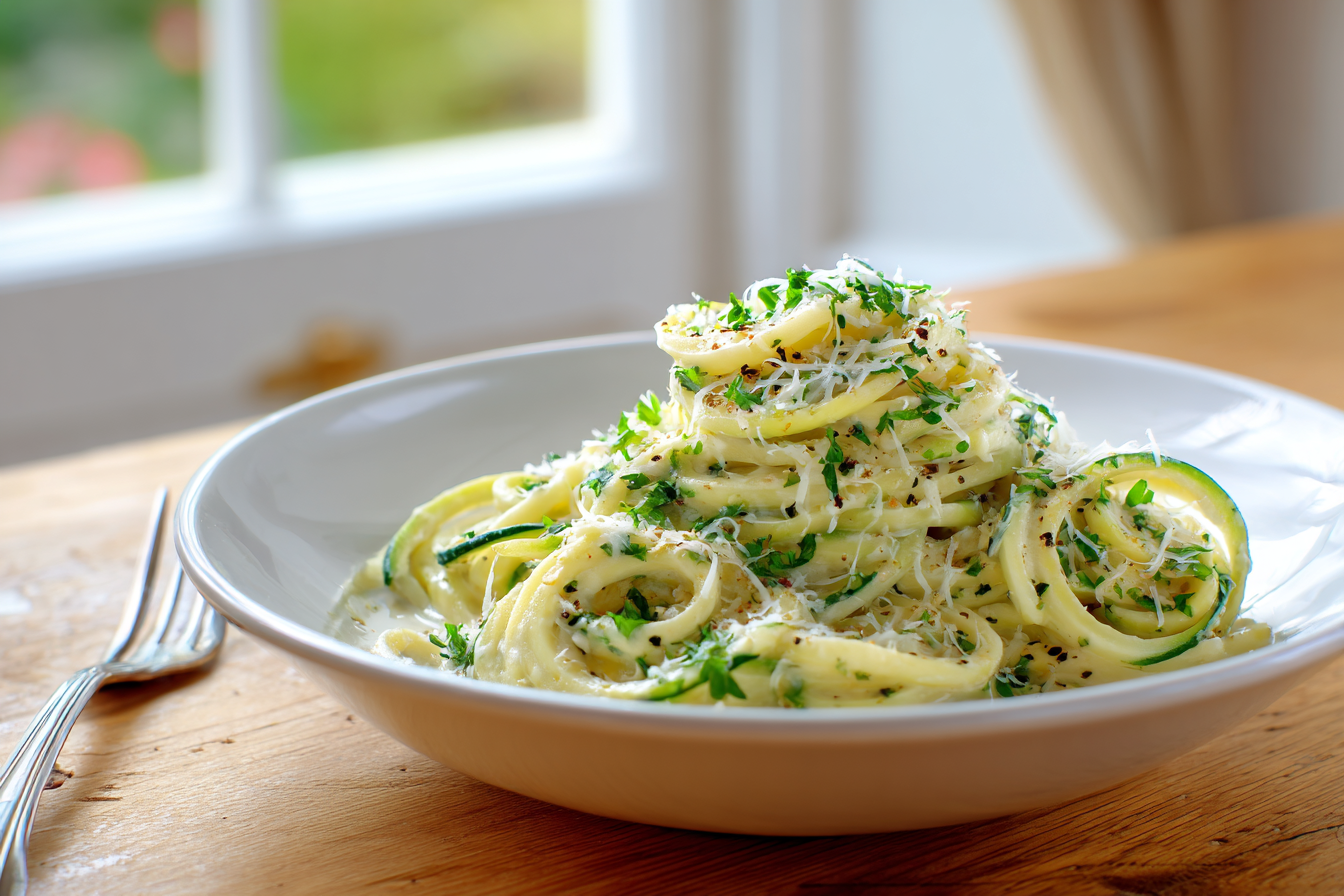
Zucchini Noodles with Creamy Garlic Sauce
Cuisine: Italian2
servings20
minutes5
minutes175
kcalQuick and satisfying zucchini noodles tossed in a rich, creamy garlic-Parmesan sauce that comes together in minutes.
Ingredients
2 medium zucchini, spiralized (about 4 cups)
1 teaspoon salt, for draining zucchini
1 tablespoon olive oil
2 cloves garlic, minced
2 tablespoons cream cheese (regular or spreadable)
⅛ teaspoon garlic powder
¼ cup heavy cream or milk
½ cup grated Parmesan cheese
Salt and black pepper to taste
2 tablespoons fresh parsley, chopped (optional)
½ cup cherry tomatoes, halved (optional)
Directions
- Place your spiralized zucchini noodles in a large bowl and toss them with 1 teaspoon of salt. Spread the noodles out on a layer of paper towels or place them in a colander set over a bowl. Let them sit for 15 minutes to allow the salt to draw out excess moisture. This step is critical for preventing watery noodles.
- After the zucchini has released its liquid, squeeze the noodles with your hands over the sink to remove as much water as possible. You’ll be surprised how much comes out. Pat them thoroughly dry with fresh paper towels. The drier your zoodles, the better they’ll hold up in the sauce.
- Heat the olive oil in a large skillet over medium-high heat. Add the minced garlic and cook for about 60 seconds, stirring constantly, until it becomes fragrant but not browned. Be careful not to burn the garlic or it will taste bitter.
- Add the cream cheese and garlic powder to the pan, stirring constantly as the cream cheese melts. Once it starts to soften and break down, slowly pour in the heavy cream or milk while continuing to stir. Keep stirring until the mixture becomes smooth and starts to bubble and thicken, about 2-3 minutes.
- Turn the heat down to low and stir in the grated Parmesan cheese. Continue stirring until the cheese is completely melted and incorporated into the sauce. The sauce should be smooth, creamy, and thick enough to coat the back of a spoon. If it seems too thick, add a splash more milk or cream.
- Add the dried zucchini noodles to the sauce and toss them gently with tongs to coat them evenly. Let them warm in the sauce for 2-3 minutes, tossing occasionally, until they’re heated through and slightly tender but still have a bit of bite. Don’t cook them longer or they’ll get mushy and release more water.
- Taste the zoodles and season with salt and black pepper as needed. Remember you already salted them earlier, so start with just a little bit of additional salt. If using cherry tomatoes, fold them in now so they stay fresh and juicy.
- Remove the pan from heat and transfer the zoodles to serving plates. Garnish with chopped fresh parsley and extra Parmesan cheese if desired. Serve immediately while hot for the best texture and taste.
Notes
- Don’t skip the salting and draining step or your zoodles will be watery and dilute the sauce.
- You can substitute half-and-half for the heavy cream and milk combination.
- For a thicker sauce, add 1 tablespoon of flour or tapioca starch when you add the cream cheese.
- Leftovers can be stored in the fridge for up to 2 days but the texture won’t be as good when reheated.
- Add cooked shrimp, grilled chicken, or crispy chickpeas to make this a more filling main course.
Frequently asked questions
Q: Can I use a vegetable peeler instead of a spiralizer?
A: Yes, you can use a vegetable peeler to create flat ribbon-style noodles instead of spiral ones. Just run the peeler down the length of the zucchini, rotating as you go to avoid the seedy center. The ribbons work just as well with the sauce, though they’ll look different from traditional spiralized noodles.
Q: Why are my zucchini noodles always watery?
A: Watery zoodles usually mean you skipped or rushed the salting step. Zucchini is 96% water, so you need to draw out that moisture before cooking. Salt them generously, let them sit for at least 15 minutes, then squeeze and pat them completely dry before adding them to your pan.
Q: Can I make the sauce ahead of time?
A: Yes, you can make the creamy garlic sauce up to 2 days ahead and store it in the fridge. When you’re ready to eat, spiralize fresh zucchini, prep it by salting and draining, then reheat the sauce gently in a pan before adding the noodles. Fresh zoodles always taste better than ones that have been sitting around.
Q: What’s the best way to reheat leftover zoodles?
A: Reheat leftover zoodles gently in a pan over low heat, stirring frequently. Don’t use the microwave because it makes them release more water and turn soggy. Keep in mind that zoodles are best eaten fresh, and leftovers won’t have quite the same texture even with careful reheating.
