

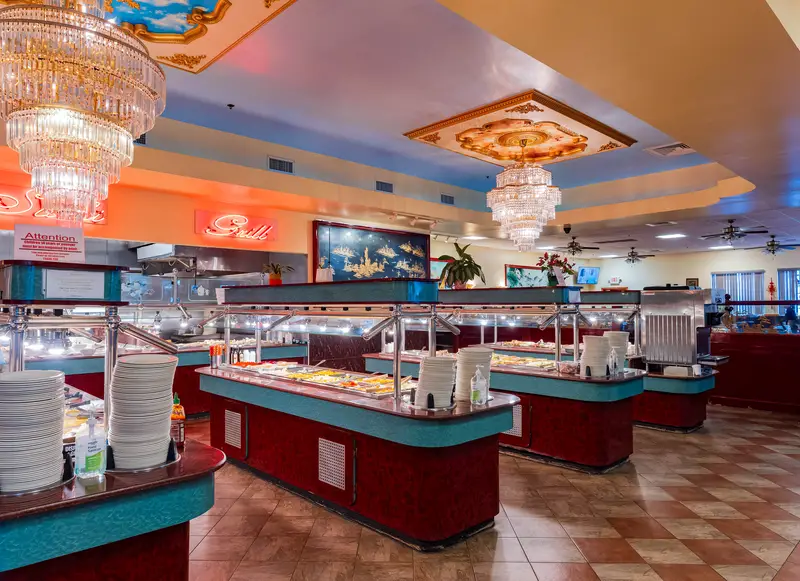
The steam table at a Chinese buffet has a pecking order, and everyone in the dining room understands it without being told. Some trays sit untouched all afternoon. Some get emptied and refilled before the sneeze guard has time to fog up. And then there is the seafood tray, the one people drift toward and hover over, waiting for a server to come out with a fresh pan. That hovering is misplaced. Crab legs are the one item on an all-you-can-eat line that is almost never worth the plate space, and the case against them comes from inside the business.
Everything else sorts itself out once you stop asking what looks expensive and start asking two questions: what did this cost the kitchen, and what does it taste like after an hour under a lamp.
10. Crab Legs
Buffet crab legs are bought to hit a price, not a standard. A buffet owner who took questions publicly about how these restaurants operate described watching Chinese buffets at the fish market buy the bottom of the barrel, crab legs included, already past their prime, and then not steam them properly in order to save on volume.
Either direction costs you. Crab that has been cooked too long goes tough and rubbery and loses most of the sweetness that made it worth cracking in the first place. Then there is the labor. You work through shell for twenty minutes to build a small pile of dry meat, and the butter sitting next to the tray is frequently margarine. The item that reads as the biggest steal on the line is the one the house has put the least effort into getting right.
9. Buffet Sushi And Sashimi
Sushi is meant to be eaten within minutes of being made, which is the opposite of how a buffet functions. Rice dries out quickly on an open counter, and delicate fillings lose their aroma and texture sitting anywhere near heat.
Nothing on a buffet sushi tray was made because you wanted it. It was made in a batch, laid out, and then picked over by dozens of strangers sharing the same tongs. The Food and Drug Administration’s standard is that food should not stay at room temperature longer than two hours, and a buffet counter tests that limit from open to close. Oysters on ice sit in the same category, and the same buffet owner advised against those too, particularly in the Midwest, where they have farther to travel. Sushi is worth paying for when somebody rolls it after you order.
8. Crab Rangoon
There is almost no crab in crab rangoon. Most versions on a buffet line are imitation crab and cream cheese folded into a wrapper and deep-fried, because real crab does not survive the buffet price point. What you are paying for is fried dough and processed filling.
Straight out of the fryer they are genuinely good, and that window is short. The wrapper softens, the filling goes flat, and a rangoon that has been sitting for half an hour is a chewy pocket of not much. If the tray is brimming and nobody has been near the fryer, leave them. They are also the cheapest thing on the line to produce in bulk, which is exactly why there are so many of them.
7. Egg Rolls
Egg rolls are the clearest demonstration of what a heat lamp does to fried food. Steam builds up inside the wrapper as they sit, and the shell that was crisp ten minutes ago turns limp and greasy.
The oil is the second problem. Amie Alexander, a registered dietitian at Nutri Peak, says fried food left on display turns soggy and stale because the oil is oxidizing, “which gives an unpleasant flavor.” That stale-fryer taste is the flavor most Americans associate with buffet egg rolls, and no amount of sugary dipping sauce paints over it. The filling does not rescue anything either, finely chopped and generic and hard to identify by sight or by taste.
6. General Tso’s Chicken
General Tso’s earns this spot on turnover alone. It is one of the most popular dishes at any Chinese buffet, so the pan empties and gets swapped while its neighbors sit, and fried chicken from a recent batch is a completely different food from fried chicken from an old one.
The rest of it argues downward. That glossy, sticky sauce is doing nearly all of the flavor work, and once the crust has absorbed sauce and steam it stops being crunchy and starts being soft. Watch the tray before you commit. A pan that is full, undisturbed and glazed over on top has been there a while, and no lamp fixes batter that has already gone soft.
5. Sweet And Sour Pork
Sweet and sour is dessert with a meat garnish. The sauce is candy-sweet, and that syrupy glaze is very good at covering up the quality of the meat underneath, which is a large part of why it exists on a buffet line. The pork is deep-fried before it ever meets the sauce, so it goes in like a sponge and comes out heavier than it went.
The glazed spare ribs further down run the same play, sugar and stickiness standing in for whatever cut is under them. Neither dish is offensive in small quantities. Both are a poor use of a plate you fully intend to refill.
4. Lo Mein
Lo mein does not survive a long sit. The noodles keep drinking the sauce they are in, so a pan that started out loose ends up swollen, sticky and welded into clumps, with the flavor flattening as the afternoon wears on.
It is also filler, and filler is the house’s best friend. Carb-heavy trays cost a kitchen very little, which is why buffets tend to park them near the front of the line with big serving spoons while the expensive items sit further down in smaller pans with smaller utensils. If you want noodles, take a small scoop from a pan that was just set out and spend the rest of the plate somewhere better.
3. Fried Rice
Fried rice at least tells the truth about itself. It is white rice fried in oil with soy sauce, and a modest scoop is the correct base for a plate of other things.
Volume is the trap. Rice can expand up to three times its original volume, so it fills you up before you ever reach the trays the kitchen actually spent money on. Age is the other trap. As a pan sits, steam swells the grains until they clump and oil pools at the bottom, and a scoop dragged from the bottom of an old pan is greasy mush. Take it off the top of a fresh pan, keep the portion small, and it holds its own.
2. Beef And Broccoli And The Unbattered Stir-Fries
Go for the trays with no crust to ruin. Beef and broccoli and its relatives hold up on a steam line in a way fried food simply cannot, because the worst a long sit does is soften the vegetables and dull the sauce. There is no breading to travel from crisp to wet.
You are also spending your plate on what the kitchen paid the most for. Meat and vegetable dishes are the ones a buffet portions carefully, while the cheap starches go out in bulk. Skip anything already drowned in sauce, breaded or deep-fried, favor lean chicken or pork that is not swimming in oil, and the economics of the meal swing your way.
1. Steamed Dumplings And Steamed Vegetables
The best thing at a Chinese buffet is whatever came out of a steamer in the last ten minutes. Steamed dumplings and steamed vegetables are not leaning on a fried crust or a sugar glaze, so what lands on your plate is essentially what the kitchen made, and sitting under heat does far less damage to them than it does to anything breaded.
They also double as a read on the restaurant. A buffet that keeps small pans moving and replaces them instead of topping off one giant tray is being run properly, and the pan that never changes all afternoon is the signal to head for the steamed end of the line. Going at an off-peak hour helps for the same reason, since the food turns over for fewer people and the staff has time to mind it.
Build the plate from the steamer and the unbattered stir-fries, treat rice as a scoop rather than a mound, take the egg rolls and rangoon only when they are visibly fresh, and leave the crab legs to the people at the next table who are convinced they are winning.
