

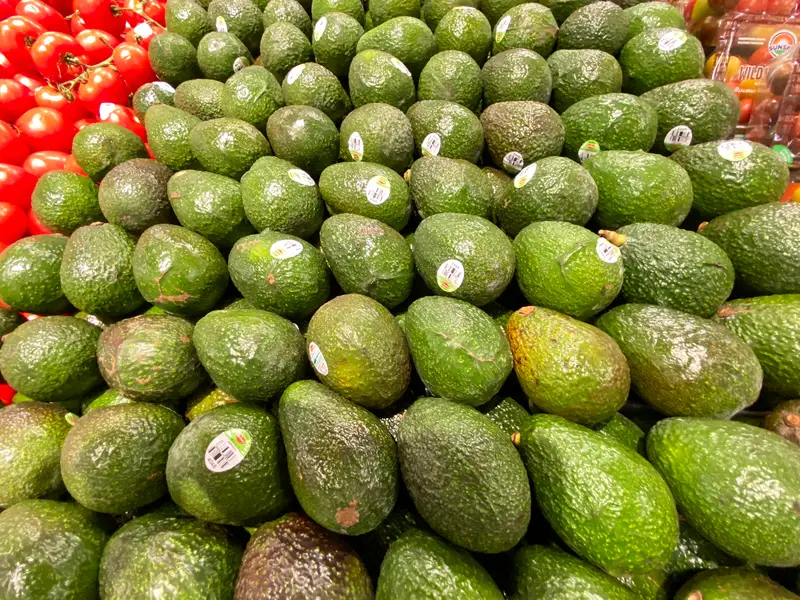
Four people have already been through the avocado bin before you get there, and you can tell. The fruit on top is dented where thumbs went in, half the little brown caps are missing, and the one that felt perfect in your hand turns into a brown, stringy mess on the cutting board that night. Avocado picking is a skill that got lost somewhere between the orchard and the self-checkout, and most of what people do at the display actively makes things worse. The one move worth learning takes two seconds and happens at the stem end, not under your thumb: flick off that small dried cap and look at the color underneath.
Ranked from the habits wasting your money to the one that actually works, here is what happens at the avocado bin.
10. Microwaving Or Baking A Hard Avocado
The internet’s favorite emergency fix is the worst thing on this list because it does not do what people think it does. Heat softens avocado flesh. It does not ripen it. The flavor stays grassy and flat, and the texture comes out oily rather than creamy, which is the opposite of the reason anyone buys an avocado in the first place.
Ripening is a biochemical process that happens over days, and no amount of microwave time substitutes for it. The oven version has the same problem. What you get is a warm, soft, sour avocado, and you have burned a fruit that would have been ready in three to five days on the counter. If dinner needs guacamole tonight and all you have is a rock, make something else.
9. Putting An Unripe Avocado In The Fridge
Cold stops ripening, and in avocados that can be a one-way door. Storing a hard, green avocado in the refrigerator halts the process, and the California Avocado Commission warns the fruit may ripen unevenly or never soften at all.
Prolonged exposure to temperatures below roughly 41 degrees Fahrenheit before ripening has started can cause chilling injury, and that is the real explanation for the avocado that stays stubbornly hard for a week and then tastes like nothing. The fridge is a tool for after, not before. Once an avocado is ripe, cold slows further softening, and the California Avocado Commission says it will hold in the crisper drawer for up to a week.
8. The Thumb Press
Everyone does it. Everyone should stop. Pressing with your fingertips concentrates all the force onto two or three small spots, and that causes localized bruising under the skin. The damage does not show up at the store. It shows up as dark patches in the flesh three days later.
Worse, the bruising compounds. A single press on a partly ripe avocado creates a spot that spreads brown through the fruit as it softens, which means the riper the avocado you buy, the better the odds it has already been damaged by somebody else’s hand. That is the hidden tax on buying ready-to-eat fruit from a picked-over display. Every shopper who tested it before you left a mark.
7. Grabbing The One With No Stem Cap
A missing cap is not a neutral feature, it is an open container. The little brown nub at the narrow end seals the fruit the way a freshness seal closes a jar, and once it is gone the flesh underneath is exposed to air, which speeds ripening up and starts oxidation at the top of the fruit.
Those bare avocados exist because other customers popped the caps off checking ripeness and then put the fruit back. You inherit the consequences. Buy the ones with the stem still attached, every time, and if the whole bin has been stripped, that is a reason to buy avocados somewhere else that week rather than a reason to settle.
6. Judging By Skin Color Alone
Color is useful for exactly one variety. Hass avocados, the most common in American stores thanks to their high oil content and creamy texture, darken as they ripen: bright green means rock hard and at least three to five days away, and you want a deep forest green that is nearly black.
Plenty of other avocados never get that memo. Reed, Fuerte, Pinkerton and Zutano from California stay green when fully ripe, and so do the big, smooth-skinned avocados grown in Florida. Judge those on feel and the stem check instead. Large brown patches on any avocado are a different signal entirely, usually damage rather than ripeness, and worth putting back.
5. Buying Ripe Fruit For A Party On Saturday
Avocados have a very narrow window of perfection, and buying a perfectly ripe one for an event several days out is one of the most common and most expensive errors in the produce aisle. By the time the guests arrive, that fruit has gone from creamy to gray.
The fix is scheduling. Buy at staggered stages of ripeness in the same trip, a couple of hard ones and one that is nearly there, so you have fruit coming due across the week rather than all at once. If you overshoot anyway, mash the surplus with lime juice and freeze it in an airtight bag for future guacamole. It will not slice, but it will blend.
4. Digging To The Bottom Of The Pile
The ready-to-eat avocados are usually not the ones on top. Fruit releases ethylene gas as it ripens, and an avocado buried under the whole display sits in more of it, the theory goes, which pushes it along faster than its neighbors on the surface.
Older stock also tends to end up underneath, so a deep pile works as a rough ripeness ladder. The practical version of this: if you want one for tonight, reach under. If you want one for Thursday, take from the top, where the firmer, greener fruit has been sitting in moving air. It is the rare produce hack that costs nothing and requires only a willingness to look slightly odd.
3. The Paper Bag With A Banana Or An Apple
For hard fruit you have already brought home, nothing beats a brown paper bag with a ripe banana or an apple tucked in beside it. Both throw off ethylene, the bag traps it along with a little moisture, and the avocados typically come good in one to three days depending on how firm they started.
Use paper, not plastic. A sealed plastic bag or an airtight container traps too much moisture, and direct sun on the bag is its own problem. Keep it on the counter, out of the light, and check daily. The one trade-off worth knowing is that fast ripening does not build quite the same depth of flavor as a slow few days at room temperature, so this is a rescue plan rather than a routine.
2. The Whole-Palm Squeeze
Done correctly, the squeeze is the best in-store test there is. Cradle the avocado in your palm and press with your whole hand rather than your fingers, which spreads the pressure and tells you about the entire fruit instead of one bruised spot. Rock hard means underripe. A gentle yield under firm pressure means ready. Hollow, mushy, or easy enough that your fingers sink in means it is already brown inside.
Texture backs it up. Ripe Hass skin feels bumpy and pebbled rather than smooth, though too much bumpiness tips into overripe. Weight matters too: a ripe avocado feels heavy for its size, and a suspiciously light one is drying out.
1. The Stem Cap Trick
Nothing else tells you what is actually inside the fruit. Pinch the small dried cap at the narrow end and flick it off with a fingernail. Bright green underneath means ripe and ready to eat today. Brown means overripe, with a good chance the flesh is already spotted. If the cap will not budge at all, the avocado is not there yet and needs days, not hours. A whitish color under the cap is the one that ends the discussion: that fruit is very likely rotten and should go straight back.
The reason it beats everything above is that the color in that little indentation mirrors the color of the flesh. The squeeze estimates. The stem cap shows you.
It comes with one rule attached. Do not stand there popping caps off a dozen avocados you have no intention of buying. Pulling the stem exposes the flesh to oxygen and starts oxidation in the fruit you leave behind, which is precisely how bins end up full of stem-less avocados nobody wants. Narrow the field with the palm squeeze, then check the cap on the one or two you are actually committing to, or do it at home the morning you plan to cut them.
The verdict: buy firm, buy with the stems on, ripen in a paper bag with a banana, and let the cap make the final call. The hard avocado you cannot bruise and can ripen on your own schedule is worth more than the soft one somebody else already pressed their thumb into.
