

Dinner is half made, the beef is in the skillet, and the spatula is already chopping at it like it owes you money. Ten minutes later you are looking at a pile of damp gray crumbles sitting in a puddle, and the spaghetti sauce you build on top of it tastes like nothing much. The beef cooked. It never browned. Those are two separate jobs, and the thing standing between them is the tool in your hand. Put it down for a few minutes.
Stirring Right Away Is The Whole Problem
Jennifer Borchardt, the culinary director of Pre Brands, says the easiest move is the one people skip. “Spreading out your beef into a thin layer on the bottom of the pan will increase the amount of surface area that’s directly contacting the hot pan,” she says. “This will make it brown much faster, and you’ll end up with some nice crispy bits!” Use the spatula to push the meat into something close to one giant patty, then let it sit for two minutes without touching it.
You will know when the clock is up by looking, not guessing. “You’ll notice it will start to brown and crisp on the edges,” Borchardt says. “That’s when you know it’s time to start breaking it up, stirring it, and cooking the rest of the beef through.” Every time you move the meat before that, you take a surface that was heating up and replace it with a cold, wet one. The pan never gets ahead. That is the mistake, and almost everybody makes it.
Gray Beef Is Steamed Beef
The browning you are after has a name, the Maillard reaction, and it really gets going somewhere between 280 and 330 degrees Fahrenheit. That reaction is what builds the deep, savory, almost nutty taste in good browned beef, the same difference you taste between a seared steak and a poached one.
Ground beef dumps a lot of water as it cooks. When that water cannot evaporate fast enough, it pools, and the meat sits in it. Water in the pan cannot get hotter than 212 degrees at sea level, which is nowhere close to what browning requires, so the meat turns pale and stays pale. Nearly every complaint about bland ground beef traces back to that one thing: too much water in the pan, not enough heat under it.
A Cold Pan Ruins It Before You Start
Dropping beef into a pan that is still warming up is the most common error of all. The meat releases its moisture while the metal is still climbing, and by the time the skillet is hot, the beef is already simmering in its own juices. You get dull color and a tough, flat result no matter how long you leave it.
Set a heavy skillet over medium-high and give it 2 to 3 minutes before anything goes in. Flick a few drops of water onto the surface. If they evaporate within a second or two, you are ready. If they just sit there and bead up, wait. Cast iron and stainless steel both hold heat well and build the browned bits at the bottom of the pan that make a sauce taste like something. Nonstick will cook the beef, but it will not build much of a crust. A hot skillet and a pound of beef should take 8 to 10 minutes start to finish.
One Pound At A Time, No Exceptions
A 10-inch skillet handles about a pound of ground beef. Push two pounds in there for a big pot of chili and you have built a stew, not a sear. All that extra meat releases more moisture than the pan can boil off, the temperature crashes, and the whole batch simmers.
Split it. Brown one batch, move it to a bowl, brown the next. It costs you a few extra minutes and buys you even cooking, which matters more than people think, because a crowded pan leaves some chunks overdone and dry while others are still raw in the middle. Working in batches also builds up the fond, the browned layer stuck to the pan, which you can loosen with broth, wine, or canned tomatoes for a sauce base that tastes like it took an hour. A bigger pan works too, if you have one.
Pat It Dry, And Stop Pre-Crumbling It
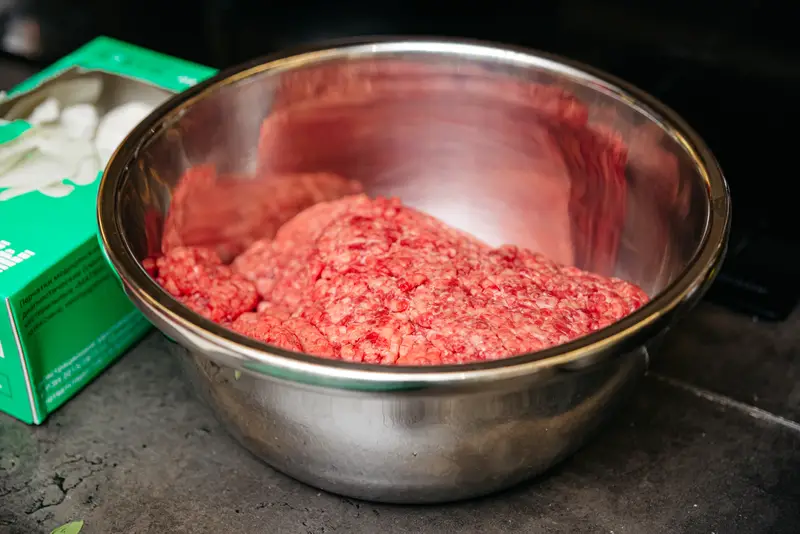
Before the beef goes anywhere near heat, blot it with a paper towel. Surface moisture is the first thing the pan has to deal with, and removing it means the skillet gets to work on browning instead of boiling. That step takes ten seconds and almost nobody does it.
Then get the meat into the pan in big pieces. Some cooks press the whole pound into one flat layer; others tear it into chunks the size of very large meatballs and press each one down with the back of a spoon. Either way, the point is contact with hot metal. Pre-crumbled beef has too much surface exposed to air, which cools the pan faster and steams more. Keep it roughly intact at the start, and save the crumbling for after the first side has color. Less scraping, less fussing, more flavor.
Salt And Onions Can Wait Their Turn
Salting raw ground beef pulls water out of the meat through osmosis, and that water ends up in the pan working against you. Wait until the beef is browned and drained, then season. Dry spices like onion powder, garlic powder, or a dash of cumin go in at the same stage, where they stick to the meat instead of washing out with the grease.
Fresh onions and garlic are worse offenders. They dump water into the pan and scorch at the heat browning requires. Brown the beef first, then add them, or cook them separately and combine at the end. Anything liquid, soy sauce included, belongs after the sear for the same reason. Cooks argue about salt timing for burgers and meatballs, where texture is the whole point, but for a skillet of beef headed into tacos or sauce, salt at the end wins.
80/20 Browns Better Than Anything Else
Fat content changes the whole job. Ground chuck at 80/20 or 85/15 is the sweet spot for most cooking. The fat carries flavor, conducts heat, and renders out enough to pour off if the recipe asks. It also tends to be the best value at the meat counter.
Ground sirloin at 90/10 browns fine, but it gives you less room for error and dries out quickly, so it needs higher heat, closer attention, and about a tablespoon of oil in the pan. With 80/20 beef you can skip the oil entirely. The one to leave at the store is 73/27. It floods the skillet with grease almost immediately and the meat boils in fat instead of browning.
The Baking Soda Trick Is Real
Dissolve a quarter to half teaspoon of baking soda in a tablespoon of water per pound of ground beef, mix it in, and let it sit for 5 minutes before it hits the pan. The baking soda raises the pH at the surface of the meat, which keeps the proteins from binding too fast and squeezing out moisture.
Less water forced out means less liquid in the skillet, which means more time browning. The meat browns faster, stays tender, and tastes deeper. Lean beef benefits most, since it has the least margin before it turns chewy. Keep the amount small and you will not taste the baking soda at all.
Drain It Right And Keep The Leftovers
Once the beef is broken up and cooked through with no pink left, 160 degrees Fahrenheit inside, pour off most of the rendered fat but leave a tablespoon or two stirred through the meat. That little bit keeps the beef moist and tasting like beef. Tilt the pan and spoon the fat into a heatproof jar, or dump everything into a colander set over a bowl if the batch is especially greasy.
Never pour that fat down the drain. It hardens as it cools and clogs pipes. Let it set up, scrape it into the trash, or keep the jar in the fridge for frying potatoes and eggs. Cooled browned beef holds in a sealed container in the refrigerator for 3 to 4 days, or 3 months in a freezer bag with the air pressed out. And do not rinse cooked ground beef under the faucet, a stunt that went viral on TikTok in 2020. It washes the grease straight into your plumbing and takes the flavor with it.
The Order That Actually Works
Hot pan first, 2 to 3 minutes on medium-high, water drops vanishing in a second. One pound of 80/20, patted dry, pressed flat or dropped in big chunks. Hands off for 2 minutes while it sizzles loudly, until the edges brown and crisp. Then break it apart and cook it through. Salt, spices, onions, and sauce after.
The hard part is not the technique. It is standing there doing nothing while your instincts scream at you to stir. Set a timer, walk to the sink, wash a bowl. The difference between gray crumbles and crisp brown edges is two minutes of leaving the pan alone.
