

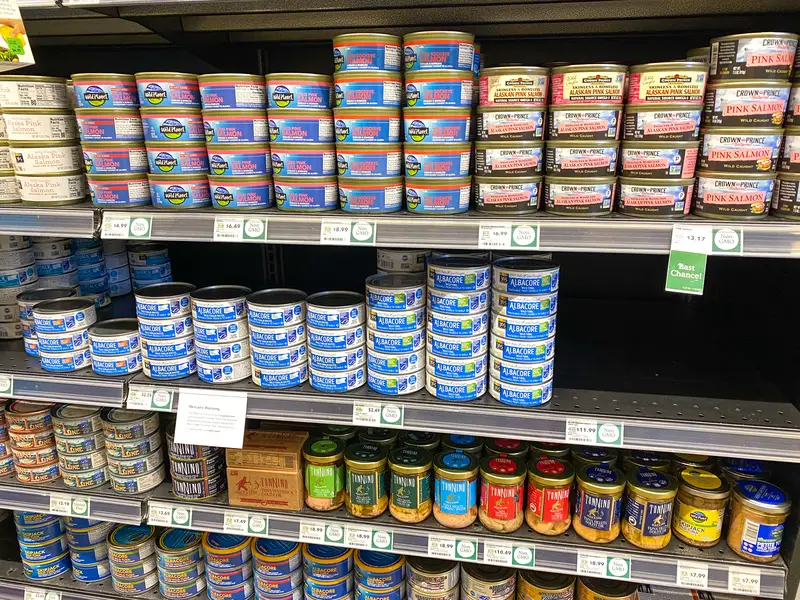
A can of tuna is supposed to be the least dramatic thing in your pantry. It keeps for years, costs a couple of dollars, and turns into lunch in about ninety seconds. Then a batch of cans that was supposed to be sitting in quarantine turns up back on grocery shelves in nine states, and the aisle gets a lot more interesting. That is what happened to Genova Yellowfin Tuna in January 2026, when its maker warned shoppers, in a notice the FDA posted, to steer clear of cans that had already been recalled once. Genova is the brand to leave on the shelf, and it anchors the bottom of this ranking of nine canned tuna brands.
9. Genova
Tri-Union Seafoods recalled select Genova cans in February 2025 after its supplier flagged a manufacturing defect in the “easy open” pull-tab lids. The defect could compromise the seal, causing the cans to leak, “or worse, be contaminated with clostridium botulinum, a potentially fatal form of food poisoning,” the company said. Those cans were pulled and held back. Then, on Jan. 16, 2026, Tri-Union said a third-party distributor had inadvertently shipped the quarantined product back out to stores, in an announcement the FDA posted on Jan. 19.
The cans landed at Meijer stores in Illinois, Indiana, Kentucky, Michigan, Ohio and Wisconsin, at Giant Food stores in Maryland and Virginia, and at Safeway, Albertsons, Vons and Pavilions locations in California.
Check your cupboard for four-packs of 5-ounce Genova Yellowfin Tuna in Olive Oil carrying UPC 4800073265, with can code S84N D2L and a best-used-by date of Jan. 21, 2028, or can code S84N D3L and a best-used-by date of Jan. 24, 2028. Also affected are 5-ounce cans of Genova Yellowfin Tuna in Extra Virgin Olive Oil with Sea Salt, UPC 4800013275, can code S88N D1M, best used by Jan. 17, 2028.
“Consumers should not use the product even if it does not look or smell spoiled,” the company said, and anyone feeling unwell should get medical attention right away. Throw the cans away, return them to the store for a full refund, or ask Tri-Union for a retrieval kit and a replacement coupon. Tri-Union is taking questions at (833) 374-0171, Monday through Friday, from 9 a.m. to 5 p.m. ET, or at support@thaiunionhelp.zendesk.com.
The original 2025 recall also covered cans sold under the Van Camp’s, H-E-B and Trader Joe’s labels. A brand whose recalled stock can find its way back onto a shelf almost a year later, even by way of a third-party distributor, has a supply chain problem, and that is reason enough to reach past it for something else.
8. Chicken of the Sea
Open a can of Chicken of the Sea 25% Less Sodium Chunk Light and the first thing you meet is a puddle. Pale pink flakes float around in it, and after draining all that liquid the fish still eats bone-dry, with the flavor more or less rinsed out of it. Mayonnaise will not rescue it. Neither will melted cheese in a casserole, which is usually the last refuge of bad tuna.
The label does not bother telling you what species you are eating, which for a chunk light can usually means skipjack. Cheap is the entire argument here, and the can is not cheap enough to justify the trade. Chicken of the Sea is owned by Thai Union Group, whose U.S. arm, Tri-Union Seafoods, also makes Genova. It was one of three brands named as defendants in the packaged seafood antitrust case in the U.S. District Court for the Southern District of California, and it settled with consumers for $20 million in 2023.
7. Bumble Bee
Bumble Bee’s Solid White Albacore in Water looks like a step up the moment you peel the lid. Albacore is whiter, firmer and milder than skipjack, and it photographs beautifully sitting in its water.
Then you taste it. The flavor lands somewhere between stale and sawdust, dry in a way that matches a texture already on the dry side, and it never quite arrives at tasting like fish. If you want tuna that tastes like tuna rather than like wood chips, this is not the can.
The corporate history does not help. Bumble Bee pleaded guilty in 2017 to fixing canned tuna prices, paid a $25 million criminal fine and filed for Chapter 11 bankruptcy in November 2019. The brand is still everywhere, still inexpensive, and still outperformed by cans that cost the same.
6. Safe Catch
Safe Catch Elite Solid Wild Tuna is the specialty can in this group, and it is priced like one. The 5-ounce tin of wild skipjack is packed with nothing added at all: no water, no oil, no preservatives.
Credit where it is earned. The texture is better than the mass-market brands, which is no small thing in a category where most cans eat like shredded paper. The flavor is where it falls apart. It comes through metallic and overly salty, and the aftertaste turns sharply fishy rather than clean.
You are paying a premium over StarKist and Bumble Bee for a can that you will want to bury in dressing anyway. That is the worst kind of upgrade, the kind that costs more and fixes nothing.
5. Great Value
Walmart’s Great Value tuna sets the price floor in most of the country, and what you surrender for that price is information. Walmart says it has worked to put the Marine Stewardship Council seal on Great Value tuna, and part of the supply comes from Pacific Island Tuna, a venture backed by The Nature Conservancy and the Marshall Islands. Beyond that, the can does not tell you much about who packed it.
Treat it accordingly. This is tuna for a hot dish, for a melt with enough onion and pickle and mayonnaise that the fish is a texture rather than a flavor. Nobody should be eating it out of the can with a fork.
It ranks above the brands below it for one honest reason: it never pretends to be anything more than the cheapest can in the aisle, and it charges accordingly.
4. Kirkland Signature
Costco shoppers tend to assume Kirkland Signature albacore is a premium buy that just happens to come in bulk. The surprise is who packs it. Kirkland’s canned albacore has been widely reported to be packed by Bumble Bee, the same operation sitting at No. 7 on this list, which means the warehouse-club halo is wrapped around a very familiar product.
In Greenpeace’s 2017 Tuna Shopping Guide, Costco ranked 13th of 20 and landed in the failing group, though Greenpeace did credit the Kirkland albacore with a traceability website.
The value is still real. Buying albacore in a multipack brings the per-can price down below what most supermarkets charge for the national brands, and solid white albacore holds together better in a salad than chunk light. It beats Bumble Bee on price per can, not on the fish, so do not buy it expecting something different from what Bumble Bee sells under its own name.
3. StarKist
StarKist Solid White Albacore in Water is the best-tasting of the big three supermarket brands, a low bar cleared cleanly. The can yields thick, pale chunks that actually taste like tuna, blandly salty with only a faint metallic note underneath. The texture is still dry. It is the standard supermarket can, and it is the standard for a reason.
That makes it genuinely useful in a tuna salad built on rich ingredients, where mayonnaise, mustard, celery and a hard-boiled egg are doing most of the flavor work and the fish just needs to show up.
The brand’s record is the reason it is not higher. StarKist was part of the same price-fixing conspiracy as Bumble Bee. It pleaded guilty in 2018 and was fined $100 million in 2019, the maximum the law allowed.
2. 365 by Whole Foods Market
The 365 unsalted skipjack in water is the quietest can in this lineup and one of the smartest buys. No added salt means you decide how the finished dish tastes instead of fighting a brine that was set in a factory, which matters if you are folding tuna into pasta, a rice bowl or anything already carrying anchovies, olives or capers.
It also comes with the sourcing credentials you would expect from the Whole Foods house label: the skipjack is 100% pole and line caught, and it outranks StarKist, Bumble Bee and Chicken of the Sea when the cans are opened side by side.
It is not a revelation. It is a reliable, honestly labeled can of skipjack at a store-brand price, which puts it ahead of every national brand here except Wild Planet.
1. Wild Planet
Wild Planet wins because it answers the question the rest of the category dodges. Wild Planet buys only pole and line, troll or handline caught tuna, with most of its albacore from Japan and the U.S., and the brand’s sourcing commitments are printed on the can rather than buried three clicks deep on a website. Compare that to a chunk light can that will not even name the species inside it.
You pay for it. Wild Planet is one of the priciest cans on this list, and if your tuna is destined for a casserole under a layer of crushed potato chips, that money is wasted.
Everywhere else, it is the one worth buying. This is tuna that holds its shape, carries actual flavor, and does not need a half cup of mayonnaise to become edible, which is the real test of a can of fish. Put it on toast with olive oil, lemon and black pepper and you understand instantly what the supermarket brands have been missing.
The ranking comes down to a simple rule: the more a brand tells you about the fish, the better the fish tends to be. Genova’s problem is the opposite of flavor, a can that was recalled, quarantined and then shipped out again anyway. Check the codes, clear the shelf, and buy the brand that puts its sourcing on the label.
