

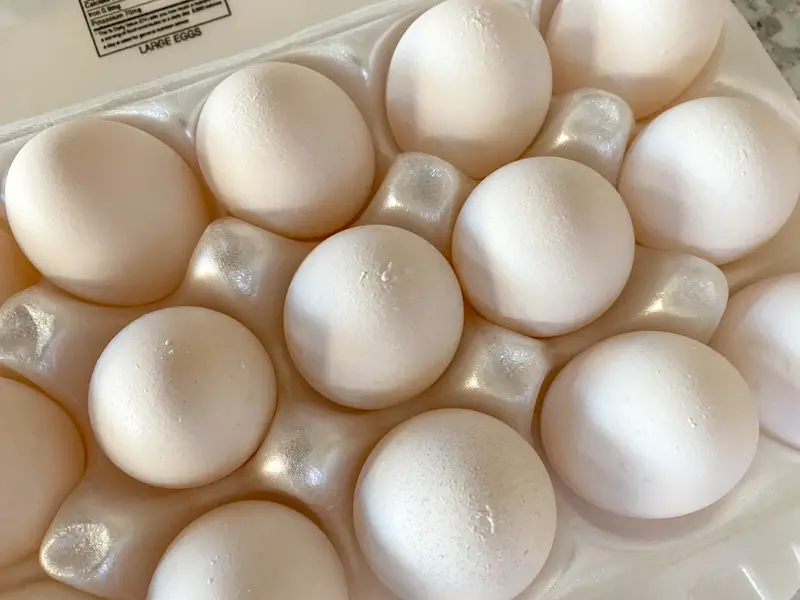
There’s a carton in the back of your fridge that has been there longer than you want to admit. The stamp on the side is smudged, you can’t remember which grocery trip it came from, and you’re standing there holding an egg over a hot pan trying to decide. Skip the bowl of water. The check that actually answers the question is cracking the egg into a clean bowl and putting your nose over it.
Your Nose Makes The Final Call
A bad egg announces itself the second the shell opens. According to the USDA, a spoiled egg gives off a foul odor when cracked, and that odor sticks around even if the egg has already been cooked. The smell is sulfur, sharp and obvious, and it happens because bacteria break down the proteins inside and release hydrogen sulfide gas.
Crack into a bowl, never straight into the skillet or the cake batter. One rotten egg dropped into four good ones costs you the whole mixing bowl and the pan it was headed for. With a very old egg you can sometimes catch the smell through the shell before you even break it.
Smell every egg, every time. It takes two seconds and it is the one test that speaks to spoilage instead of age.
The Float Test Only Tells You How Old The Egg Is
Drop an egg into a tall glass or a big bowl of water and watch what it does. If it sinks and lies flat on its side, it’s fresh. If it sinks but stands on its end, it’s getting on in age and should get used soon. If it floats, it’s old.
Eggshells are porous. Air seeps in over time and the pocket inside grows, which makes the egg more buoyant. That’s all the test measures. The USDA says a floating egg may still be perfectly fine to eat, and recommends cracking it open to smell it and look it over before you decide.
So the water trick is a screening step, not a verdict. Plenty of people dump a floater straight in the trash without ever cracking it, and some of what they toss was perfectly usable.
What The Shell Tells You Before You Crack It
Three things on the outside of an egg mean it doesn’t get used: cracks, slime, and powder. Run your fingers gently over the surface, since hairline cracks don’t always show up to the eye. The shell is the egg’s barrier, and once it’s broken, bacteria have a way in and moisture has a way out.
A slimy or wet-feeling shell points to bacterial contamination. A chalky powder, a green dusty film, or a fuzzy black patch points to mold, which grows when eggs sit somewhere warm, humid, or dirty. Molds such as Penicillium and Alternaria turn up on eggshells, and they don’t stay on the outside. If mold has worked through, you may see black spots on the inside of the shell. Rinsing it off doesn’t fix anything.
Check the carton at the store before it goes in your cart. If any egg is cracked or leaking, grab a different dozen. An egg you crack yourself carrying groceries up the stairs is a different situation: use it right away rather than letting it sit.
Pink, Green And Iridescent Mean Throw It Out
Once the egg is in the bowl, look before you reach for the whisk. A white or yolk with a pink cast, a greenish tint, or an oily rainbow sheen across the surface is done. Same with black spots, and same with anything slimy sliding around the bottom of the bowl.
Those shades come from bacterial growth, not from the hen or her feed. There is no cooking your way past them and no scooping out the bad part. Tip the bowl into the trash, rinse it, wash your hands, and start over with a fresh egg.
A white that pours out thin and watery is a different story. That’s an older egg, not a spoiled one. It’ll spread all over the pan when you fry it and it won’t whip up the way you want for meringue, but it isn’t a reason to toss anything.
Things That Look Wrong But Are Completely Fine
A cloudy white startles people, and it shouldn’t. Cloudiness shows up in very fresh eggs. The stringy white rope attached to the yolk is the chalaza, a normal part of the egg that holds the yolk in place. Blood spots come from a tiny blood vessel breaking while the egg was forming inside the hen. Flick it out with the tip of a knife if it bugs you, or don’t.
That grayish green ring around a hard-cooked yolk looks like trouble and isn’t. The USDA says those eggs are fine to eat, and the color usually comes from overcooking or from iron in the cooking water. Pull your eggs off the heat sooner and the ring goes away.
Yolk color varies too, from pale yellow to deep orange, depending on what the hens were eating. Pale doesn’t mean old, and orange doesn’t mean fresher.
The Date On The Carton Is Not The Rule You Think It Is
The federal government doesn’t require egg producers to print an expiration or sell-by date at all, though some states do. When a producer includes one, it has to run in month/day format behind a prefix like Exp. or Sell by. What is required on every carton of USDA-graded eggs is the pack date.
That’s the three-digit number most shoppers scan right past. It’s the day of the year the eggs were washed, graded, and packed. A pack date of 001 is January 1. A pack date of 365 is December 31, or 366 in a leap year. On USDA-graded eggs, a sell-by or Exp. date can be no more than 30 days after that pack date.
The USDA says to use refrigerated eggs within 3 to 5 weeks of the day you buy them, which means the sell-by date often passes while the eggs in your fridge are still perfectly good. Treat the stamp as a starting point and let the egg itself cast the deciding vote.
Where You Keep Them In The Fridge Matters
That molded egg tray in the refrigerator door is the worst spot in the appliance. The door is the warmest part and the temperature swings every time somebody opens it. Eggs belong on a main shelf, in their carton, toward the back where it’s coldest. Set the fridge to 40°F (4°C).
Get them in there fast after you shop. The USDA warns against leaving refrigerated eggs out at room temperature for more than 2 hours, because cold eggs sweat as they warm up, and that moisture on the shell is what bacteria want.
Don’t wash store eggs before storing them either. Wait until you’re ready to use one. And keep them away from the sliced onion and the leftover takeout, since shells pick up strong odors.
The Flashlight Trick And The Shake Test
Candling is what producers do on a conveyor belt with mechanical sensors, and you can do a rough version at home. Darken the room, hold the egg up against a strong flashlight, and look at the wide end for the air cell. In a USDA Grade AA egg, the top grade, that cell is no more than one-eighth of an inch deep. The bigger the pocket, the older the egg.
Like the water bowl, candling measures freshness and stops there. It won’t tell you an egg has spoiled.
The shake test is weaker still. Hold an egg to your ear, shake it, and a sloshing rattle means the white has thinned out with age. That’s a texture change. It says nothing about whether the egg is bad, and plenty of rattling eggs smell perfectly clean when you crack them.
Hard-Boiled Eggs Run On A Shorter Clock
Boiling an egg shortens its life instead of extending it. Hard-cooked eggs keep about a week in the fridge, not the 3 to 5 weeks a raw egg in the shell gets, because boiling strips the protective coating off the outside of the shell.
Peel one and look at the yolk. A yolk that’s watery or gray is a sign the egg is past using. A shell that feels slimy or chalky points the same direction, and so does browning on the shell.
Cracked yolks and cracked whites from the fridge have their own window: raw whites and yolks you’ve separated into a container last 2 to 4 days, no more.
When It’s A Coin Flip, Toss It
Clean dry shell, no cracks, no slime, no odor after cracking, a rounded yolk and a clear or slightly cloudy white: cook it and stop worrying. That’s the whole checklist, and it runs in about ten seconds.
The one gap worth knowing about is that a cold egg in the early stage of going off may not smell like much yet, which is why the shell check and the look in the bowl matter alongside the sniff. Read the signs together instead of leaning on any single one.
And when you genuinely can’t call it, the decision is easy. An egg costs pennies. Cooking a questionable one thoroughly does not undo spoilage, so there’s nothing clever to salvage. Throw it out, wash the bowl, and crack the next one.
