

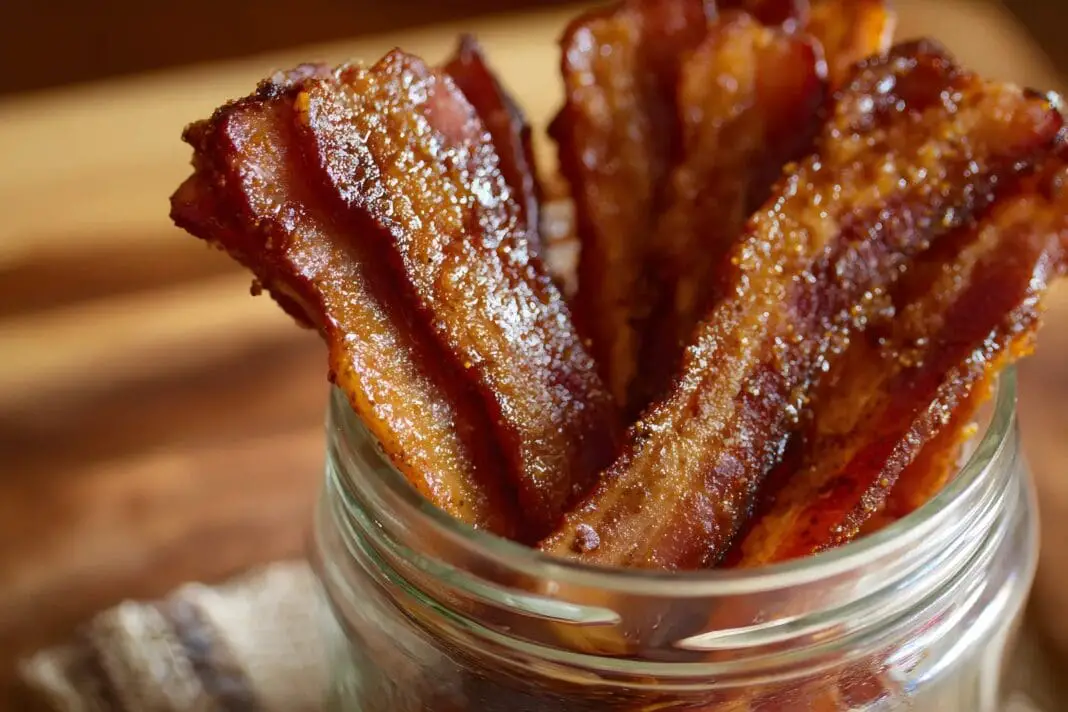
Sunday morning, eight slices of thick-cut bacon in the skillet, and twelve minutes later you are looking at something pale, bendy, and sitting in a quarter inch of grease. The strips went in wet. Not rinsed-under-the-faucet wet, just slick from the package, that damp sheen of cure and water that every pack of grocery store bacon carries. That surface water has to cook off before the strips can really start to brown, so those first minutes are spent steaming the meat instead of frying it. Lay the slices out on a paper towel and blot both sides before they ever touch metal, and the whole cook changes.
Dry Bacon Crisps, Wet Bacon Steams
Moisture on the surface of any meat turns to steam the second it hits heat, and steam is the enemy of browning. Instead of a sear you get a gray, flat exterior, and in the case of bacon you get strips that stay chewy in the middle no matter how long you leave them. A dry surface lets the Maillard reaction do its work, which is where that deep, roasted, slightly sweet flavor in good bacon actually comes from.
Blotting also cuts the spatter. Water hitting hot fat is what makes the stove pop and sting your forearms. Less water on the slices means a quieter pan and less to wipe down afterward, which is reason enough on its own.
Blot It, Do Not Rinse It
Some cooks run raw bacon under the tap, usually because they think it washes off excess salt. The USDA advises against washing or rinsing any raw meat, since the splashing spreads germs around your sink and counter, and cooking takes care of the rest. All you accomplish is adding back the exact moisture you need gone, plus a wet sink and a wet counter.
The right move is two or three paper towels and about a minute of work. Press, do not scrub. You are not trying to wring the slices out, just take the shine off both sides. Keep a few more towels on the counter, because you will want them again when the bacon comes out of the pan. USDA guidance also says raw bacon belongs at 40 degrees Fahrenheit or below and should be used within seven days, or frozen at 0 degrees, where it is best used within a month or so.
Then Put It In A Cold Pan
Blotting buys you nothing if you drop the slices into a screaming hot skillet. High heat cooks the lean meat faster than the fat can melt out, which is how you end up with a strip that is burnt at the edges and rubbery through the middle. Start with a cold pan instead, lay the bacon in, then turn the burner on. The fat melts out gradually and the slices fry in it.
Chris Mattera, culinary innovator at North Country Smokehouse, backs the cold start even with cold bacon. Cooking bacon from cold is fine, he said, “and could even yield a marginally more well-rendered and crisper slice, especially if started in a cold pan.” He also admits he does not always have the patience for it himself, and cooks bacon in a preheated cast iron pan over medium heat until almost crisp.
Skip The Oil And Keep The Heat Low
Bacon brings its own fat, so the pan needs nothing. Adding butter or oil just floods the surface and overcooks the outside before the interior fat has rendered, leaving you with a greasy strip that tastes scorched. If you bought something unusually lean and the pan stays dry, a light film of oil is a fair rescue, but it is a last resort and not a first step.
Medium-low is the ceiling. Standard streaky bacon needs no more than 7 to 10 minutes in the pan, while back bacon, the leaner and usually thicker cut from the loin also called Canadian bacon, can take 10 to 12 minutes. When it is not crisp yet, give it more time rather than more flame. Cranking the dial is how good bacon turns into hard bacon.
Give The Strips Room
No amount of blotting removes every bit of moisture, and whatever is left has to escape as steam. Pack the slices in shoulder to shoulder and that steam gets trapped between them, which is how you get a tangle of floppy strips plus uneven cooking, some pieces done and others still translucent. Spread the bacon out in a single layer with a little space between each slice.
A 12-inch skillet realistically handles six to eight slices at a time. If you are feeding a crowd, work in batches and hold the finished strips in a low oven, or move the whole operation to a sheet pan.
The Room Temperature Argument, Settled
You have probably read that bacon should sit on the counter for 15 minutes before cooking, the way you would rest a steak. At least one man who makes bacon for a living is not sold. “Strictly speaking, bacon does not need to come up to room temp before cooking,” Mattera said. “A slice of bacon is generally thin enough that the difference in cook time between a cold slice and a room temperature slice is virtually nonexistent.”
Where a few minutes on the counter does help is peeling the slices apart. Cold fat sticks to the slice next to it, so strips tear as you separate them and you end up with ragged half-pieces on the plate. Let the sealed package soften slightly, pull the slices apart clean, then blot. That is the version of this tip worth keeping.
If You Would Rather Use The Oven
Baking is the better method for a pound or more, and the blot still applies. Chef Billy Parisi, known for easy-to-follow recipes and essential cooking techniques, keeps it simple on temperature: “I usually go 375 or 400 degrees Fahrenheit, no convection.” He finds those temperatures best for quick, even cooking, where the fat renders in the time it needs to reach real crispness. On convection, drop the setting by about 25 degrees.
Parisi says the temperature of the bacon going in does not matter, though he lets it sit out five to 10 minutes to take the chill off, which cuts smoke and popping. Line the sheet pan with parchment or foil unless you enjoy scrubbing baked-on grease.
Season After You Blot, Not Before
A dry surface grips seasoning. Salt and spices dissolve and slide off wet meat, which leaves you with bland patches and a puddle of seasoned liquid in the pan. Blot first, then season, then cook. Brown sugar or a drizzle of honey before baking gives you the sweet-salty version; cracked peppercorns make pepper bacon; red pepper flakes or chili powder push it spicy, and sweet plus spicy together is the combination worth trying once.
When the strips come out, land them on a paper-towel-lined plate and pat the tops. Pour the drippings into a jar and keep them for frying breakfast potatoes or sauteeing greens. Grease that is not going in a jar goes into an old coffee can or tub to solidify, then into the trash, never down the drain.
One pass with a paper towel is the cheapest upgrade in the whole breakfast. Do that, start cold, keep the heat down, and bacon stops being a gamble.
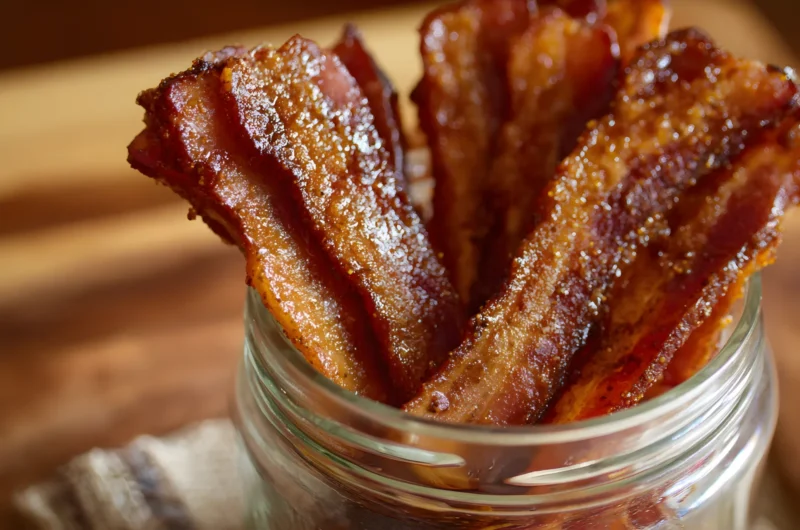
Pat-Dry Crispy Skillet Bacon
Cuisine: American4
servings10
minutes12
minutes220
kcalThe one-minute paper towel step that turns limp, greasy bacon into shatter-crisp strips every single time.
Ingredients
1 pound thick-cut bacon (about 12 to 16 slices)
Paper towels, for blotting and draining
1 teaspoon coarsely cracked black peppercorns (optional)
2 tablespoons packed light brown sugar (optional)
1 tablespoon pure maple syrup (optional)
1/4 teaspoon red pepper flakes (optional)
1/4 teaspoon chili powder (optional)
1 teaspoon neutral oil, only if your bacon is very lean
1 clean jar or can, for the saved drippings
Directions
- Leave the sealed package on the counter for five to 10 minutes before you open it. Cold fat glues the slices together, so a few minutes takes the chill off and lets you peel them apart without tearing. Intact slices cook more evenly and look far better on the plate.
- Lay the separated slices on a cutting board lined with paper towels. Press more paper towels gently over the tops to blot both sides dry, working across the whole surface. Do not scrub or stretch the slices; you only want the wet sheen gone.
- Season now, while the surface is dry and will actually hold it. Press cracked peppercorns, red pepper flakes or chili powder onto the slices. Save brown sugar or maple syrup for the oven method, since sugar scorches in a skillet. Keep it light, since bacon is already salty and cured.
- Arrange the slices in a completely cold heavy skillet, preferably cast iron, in a single layer with a little space between them. Six to eight slices is the limit for a 12-inch pan. Do not add oil unless the bacon is unusually lean, and do not preheat the pan.
- Set the burner to medium-low and let the pan come up slowly with the bacon in it. The fat should start to bead and pool gradually rather than spitting. Resist turning the heat higher in the first few minutes, since high heat cooks the meat faster than the fat can render.
- Cook 7 to 10 minutes for standard streaky bacon, turning and rearranging the slices every couple of minutes so they brown evenly. Thick-cut or loin-style bacon will want 10 to 12 minutes. If it is not crisp yet, add time rather than heat.
- Pull the bacon while it still has a slight give, because it firms up as it cools. Move the strips to a plate lined with paper towels and blot the tops to pull off the surface grease. Cook any remaining slices in batches, draining most of the fat between rounds.
- Let the pan cool slightly, then pour the drippings through a fine strainer into a clean jar and keep them for frying potatoes or sauteeing greens. Any grease you are not saving goes into an old can or tub to solidify, then in the trash. Serve the bacon right away with eggs, or crumble it over a salad or mashed potatoes.
Notes
- For a pound or more at once, blot the slices the same way and bake them on a parchment or foil lined sheet pan at 375 or 400 degrees Fahrenheit with convection off.
- Skip the oil in a hot pan habit entirely. Extra fat overcooks the outside of the slices and makes the finished bacon greasy.
- Cooked bacon can stay slightly pink because of the curing agents, so judge doneness by color of the fat and crispness rather than by pinkness alone.
Frequently Asked Questions
Q: Do I still need to pat bacon dry if I am baking it in the oven?
A: Yes. Surface moisture has to evaporate before the fat can render, whether the heat is coming from a burner or an oven element. Blotting also keeps the sheet pan from spitting and helps any brown sugar or pepper stay stuck to the slices instead of sliding off.
Q: Can I rinse bacon under the faucet first?
A: No. The USDA advises against washing or rinsing any raw meat before cooking. Rinsing adds the moisture you are trying to get rid of, which means more spatter and slower rendering, and it leaves your sink to clean. A paper towel does the job better.
Q: Should bacon come to room temperature before cooking?
A: Chris Mattera of North Country Smokehouse says a slice is thin enough that the cook-time difference between cold and room temperature bacon is basically nothing. A short rest in the package helps you separate slices without tearing them, and that is the real benefit.
Q: Why does my bacon curl up and cook unevenly?
A: Usually too much heat, too fast, or too many slices crammed into the pan. Start the bacon in a cold skillet, keep the burner at medium-low, and leave space between the strips so steam can escape instead of pooling.
