

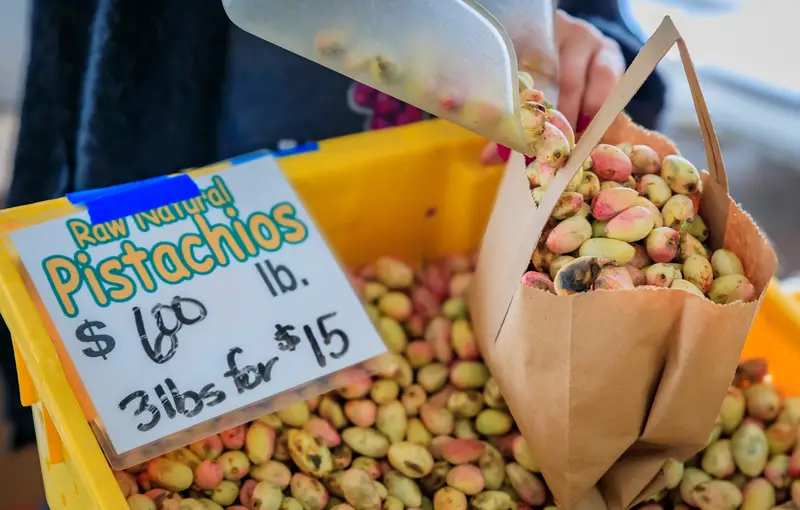
Open a bag of pistachios on a Sunday afternoon and you end up with two bowls. One holds the nuts. The other fills with empty shells that go straight into the trash while you are still chewing. That second bowl is the one worth keeping.
Pistachio shells behave almost nothing like other kitchen scraps. They are stiff, porous, and slow to rot, tough enough that university labs turn them into activated carbon that pulls lead out of water and grind them into filler for biodegradable plastic. In a house or a backyard, that toughness translates into mulch, planter filler, fire starter, a slug barrier, scrubbing powder, and some fake flowers that genuinely fool people.
Rinse The Salt Off Before The Shells Touch Anything
Most pistachios sold in American grocery stores come salted, and that salt rides along on the shell. Salt buildup in soil wilts plants, and in a small compost pile it can throw off the salinity enough to slow decomposition and hurt the microorganisms doing the work. The fix takes no effort: soak the shells in water for a few hours, or overnight if you remember, then drain and rinse them. The soak softens them and strips the salt at the same time. For craft projects, wash them, strain them, and air dry them flat on a towel so paint sticks.
They Make Mulch That Stays Put
Spread whole shells over the top of a bed and they do what bagged mulch does: hold moisture in the soil, block weeds, and insulate roots against temperature swings. Mixed with bark, dead leaves, and wood chips, they blend into a layer that looks intentional rather than like snack garbage. They also skip the sour smell a fresh load of commercial mulch gives off.
Be realistic about volume. Nobody snacks their way to enough shells for a full flower bed. A patio planter, a strip along a walkway, or the base of a couple of shrubs is the right scale. And they stay visible for a long time, so if you want a manicured look, this is not your mulch.
Cheap Filler For Oversized Planters
Skip the old trick of an inch of shells in the bottom of every pot. University of Missouri Extension explains that a coarse layer under potting mix does the opposite of what people expect: water perches on top of it, so the soggy zone moves up toward the roots instead of draining away.
Where shells do earn their place is the big decorative planter. Use them as filler so you are not buying forty dollars of potting mix to fill space no root will ever reach. They weigh far less than the stones or gravel people usually dump in there, which means you can still slide the pot across the deck. Leave plenty of real soil above them, and skip this trick for deep-rooted plants like tomatoes.
The Slug Ring Is A Long Shot
Crushed shells scattered in a ring at the base of a plant are supposed to work the way crushed eggshells do, with sharp edges that slugs and snails will not glide over. The catch: UC IPM says crushed eggshells have not been shown to be effective deterrents, and nobody has shown pistachio shells do better. The methods UC IPM does back are copper bands, traps, and hand-picking with a flashlight after dark.
If you try it anyway, use rinsed shells. Some gardeners keep salted ones for the job, but that salt leaches into the soil and damages the plant you are protecting.
Kindling That Catches In Seconds
Shells carry natural oils and burn hot and fast, which makes them good at the one thing kindling has to do. Toss a handful under your kindling with some crumpled paper, let it catch, then feed the fire wood as usual. A couple of handfuls will also bring a dying fire back.
For camping, stuff shells into a cardboard egg carton and drizzle melted candle wax over them. Tear off a cup, light it, done. Keep all of this outdoors in a fire pit or campfire ring. EPA Burn Wise tells wood stove owners not to burn cardboard or salt-soaked ocean driftwood, so salted shells and wax starters stay out of the stove, and soaked shells need to be bone dry before they go in any fire.
Compost Them, But Know What You Are Signing Up For
Shells count as a brown, carbon-rich material, the same category as dead leaves and shredded paper, so layer them with green stuff like vegetable scraps and grass clippings and aim for roughly 30 parts carbon to 1 part nitrogen.
The timeline is the catch. Shells are woody, and they will still be there long after the peels and leaves have vanished. Crush them with a food processor or a mortar and pestle, keep the pile in the hot range where Cornell says decomposition runs fastest, about 104 to 140 degrees Fahrenheit, turn it, and pick out any leftover nut bits so you are not inviting pests into the bin.
Work Them Into Heavy Clay Soil
If your yard is the dense, clay-like kind that water just sits on top of, crushed shells can help open it up. Colorado State University Extension says organic amendments improve aeration and drainage in clay, but only when they are thoroughly mixed in, not buried or laid on top. Raw woody material also borrows nitrogen from the soil while it breaks down, so compost the shells first or mix them in with a nitrogen source.
Six Shells Make One Convincing Tulip
Miniature makers figured this out years ago. A pistachio shell is already the shape of a petal. For a single tulip you need exactly six shells: three glued around a cotton swab for the base layer, three more stacked on top for depth. Paint the head pink and the stem green, dab white along the petal edges, and fold a 3 to 4-inch piece of masking tape around floral wire for leaves. Figure 12 to 15 tulips for a flower bed that reads as full.
Cherry blossoms take longer and look even better. Base coat both sides of each shell white, then mix pink into white until you get the shade you want. The stamens come from thin strips of tissue paper fringed with scissors, rolled tight, glued, and tipped in yellow. Glue the painted shells around the stamen, attach the flowers to a dried stick painted brown, and stand the whole thing in a vase.
Wreaths, Wall Art And Necklaces
The shell shape also passes for a succulent leaf, which is why faux succulents planted in an old coffee cup are the most repeated pistachio craft going. Glue shells to a canvas in a heart or a flower and supplement with burlap, twine, or paint for texture. Other versions worth your time: a wreath form layered in shells with a wooden monogram letter, a votive candle holder you repaint by season, a mirror frame, and a mini Christmas tree built on a foam cone in about 45 minutes.
Jewelry is the surprise. Drill a hole through each shell (safety glasses on, they split), paint them, and string them; a necklace takes only about 30 shells. A waterproof coating or resin finish keeps them wearable instead of crumbly.
A Scrubbing Powder For Grimy Tools
Grind dried shells into a fine powder and stir in a little dish soap and water until it forms a paste. That paste takes baked-on grime off grill grates, patio furniture, and rusty garden tools. Test a hidden corner first, because anything hard enough to scrub a grill is hard enough to scratch the wrong surface.
Scent And Color From The Same Scraps
Porous shells drink up oil-based fragrance. Pour your scent over clean shells, let them sit a few hours, then mix in dried flowers and pour the whole thing into a bowl. It is homemade potpourri that costs nothing and lasts.
Boiled in water, shells release a light brown or golden dye. A splash of vinegar or a spoonful of baking soda shifts the pH and changes the tone, so you can push the color warmer or deeper without buying anything.
What Is Actually Worth Doing
Planter filler is the one everybody should steal. It costs you a rinse and an empty coffee can on the counter, and it replaces potting mix you would otherwise buy. Kindling is next, especially the egg carton trick before a camping trip. Mulch is solid if you already garden. The slug ring is a long shot.
The compost bin is a maybe. Shells go in fine, but they will still be recognizable long after everything else, so crush them and manage your expectations. The crafts are genuinely good and genuinely slow; six shells per tulip and 15 tulips per bed means a lot of snacking before you start gluing. Keep a jar going on the counter and decide later.
