

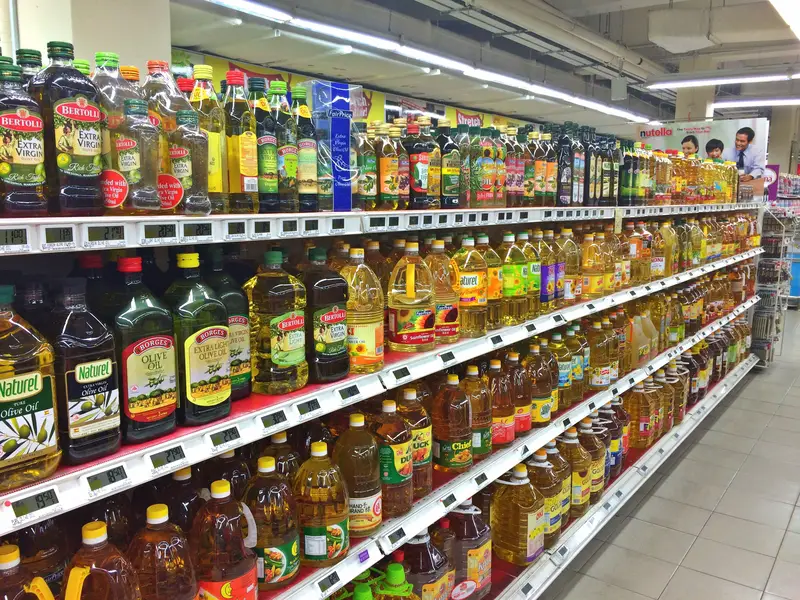
Chefs and home cooks reach for grapeseed oil for the same reason: the bottle says high heat, the smoke point usually quoted is 420 degrees, and 420 degrees sounds bulletproof. That number is real. It is also close to useless. Grapeseed is about 70% omega-6 linoleic acid, a polyunsaturated fat, the least heat-stable kind there is, and it starts breaking apart in a hot pan well before it ever makes smoke. You never see it happen. You taste it afterward, in food that goes flat and faintly rancid.
American cooks got sold on smoke point as the one number that matters when picking a frying oil. It is not even the most important one. Heat stability is, and that comes down to what kind of fat is in the bottle.
Grapeseed Oil, The One To Pour Out
Grapeseed is an industrial byproduct of winemaking that got repackaged as the smart high-heat choice. The marketing worked. The chemistry did not change. Because the oil is overwhelmingly polyunsaturated, it begins oxidizing long before it smokes, which means the visual cue cooks rely on arrives far too late to be useful. If you already own a bottle, use it cold. Homemade mayonnaise, vinaigrette, anywhere the oil never meets a burner. Keep it out of the skillet and out of the fryer.
Corn Oil Breaks Down Before It Smokes
Corn oil is cheap, neutral and listed at a smoke point of 400 to 450 degrees, which sounds like plenty. It contains 53.5% linoleic acid, and when researchers heated oils at ordinary frying heat, around 356 degrees, corn oil threw off far more breakdown compounds than olive oil or butter, well under the temperature where it starts smoking. Normal frying runs about 325 to 375 degrees and can climb to 400. Do the math on that and corn oil spends most of a fry session past the point where it holds together. The clear jug is not a bargain. It is a slow-motion flavor problem.
Cottonseed Oil Is A Fiber Crop In A Bottle
Cotton is grown for shirts, not dinner. The seeds are a leftover, and turning them into something pourable takes heavy industrial refining, partly to deal with gossypol, a natural compound in the seed that has to be stripped out or held to strict limits. What comes out the other end is 51.5% linoleic acid with a smoke point of 430 to 450 degrees. It is common in commercial fryers because it is cheap and tastes like nothing. Those are both reasons for a restaurant to buy it and no reason at all for you to.
That Jug Labeled Vegetable Oil Is Usually Soybean
“Vegetable oil” is not an ingredient, it is a shrug. The bottle is usually soybean oil or a soy and corn blend, and the only way to know which is to turn it around: the ingredient list has to name every oil inside. Soybean oil is more than half polyunsaturated fat with a smoke point of 400 to 450 degrees, a perfect example of a high number attached to a fat that cannot take the heat. A blend you have not checked behaves unpredictably in a pan, which is exactly what you do not want when you are trying to hold a fryer at 350.
Sunflower Oil Depends Entirely On Four Words
Two bottles of sunflower oil can sit side by side and be completely different products. Standard sunflower oil is high in polyunsaturated fat and unstable in heat, same story as corn. “High oleic” sunflower oil has been bred to mimic olive oil’s monounsaturated profile, and that version holds up fine in a pan. The phrase is printed right on the front. If it is not there, leave the bottle on the shelf. Research on common cooking oils keeps finding that the polyunsaturated ones degrade fastest under frying conditions, and sunflower is the usual example.
Flaxseed And Walnut Oil Belong On The Salad
Flaxseed oil smokes at 225 degrees. That is lower than the temperature your oven preheats to for cookies. Walnut oil is in the same fragile family, mostly omega-6 plus about 10% alpha-linolenic acid, which is even more delicate than the omega-6 fats in corn and soy. Heat them and the flavor you paid for vanishes, replaced by a rancid edge that no amount of salt covers. These are finishing oils. Drizzle them over roasted vegetables after the pan comes off the stove, keep them away from the burner entirely, and store them somewhere dark.
Canola Sits In The Gray Area
Canola is the most argued-about bottle in the aisle. Its fatty acid profile is better than soybean or corn, with more monounsaturated fat, but it still carries about 20% linoleic acid and 10% alpha-linolenic acid. Its smoke point sits around 400 degrees, so the number is not the problem. The fat is. Most American canola is heavily refined, bleached and deodorized. If it is your household default and you are not changing that, buy the expeller-pressed or cold-pressed version and keep it for medium heat.
Butter Burns, Ghee Does Not
Butter smokes somewhere between 300 and 350 degrees, and the culprit is the milk solids, not the fat. Clarify those out and you get ghee, which sits around 482 degrees and stays steady under real heat. Beef tallow runs past 400 degrees and is what a lot of great french fries were cooked in before cheap seed oils took over the fryer. Both change the taste of what you cook, which is either the point or a dealbreaker depending on the recipe. For a hot cast iron sear, ghee behaves better than anything in the seed oil family.
Coconut Oil Is Fine If You Want It To Taste Like Coconut
Coconut oil contains only 2% linoleic acid, which makes it one of the most heat-stable things you can put in a pan, with a smoke point around 350 degrees. The catch is flavor. It tastes like coconut, and that works for curries, doughnuts and some baked goods and ruins a steak. Refined coconut oil carries less of that taste and tolerates a bit more heat. Treat it as a medium-heat tool, not a general-purpose frying oil.
Olive Oil Does Not Die In A Hot Pan
The myth that olive oil cannot handle heat refuses to die, and it is backwards. Extra virgin olive oil is up to 83% monounsaturated fat with a smoke point range of 350 to 410 degrees, and in the 350 to 400 range it holds up better than soybean oil does, despite soybean’s higher number on paper. For actual frying, refined or light olive oil is the smarter buy, rated at 390 to 470 degrees by the North American Olive Oil Association. Research at De Montfort University that heated several oils found olive oil, butter and cold-pressed rapeseed made far fewer harmful compounds than corn and sunflower.
Peanut Oil Is The Deep-Fryer Buy
Filling a fryer takes quarts, not tablespoons, and that is where price stops being a side note. Refined peanut oil handles about 450 degrees, tastes neutral, and costs a fraction of the premium bottles. Dietitians asked about frying oils put it alongside avocado and olive for that reason: it is the one that is both stable and actually practical for a turkey or a batch of wings. If it is a turkey, fry it outdoors, well away from the house, and only once the bird is fully thawed. The obvious exception is any kitchen cooking for someone with a peanut allergy.
Avocado Oil Wins, With One Asterisk
Avocado oil is the one high-heat oil where the big number and the fat profile agree. Refined avocado oil is commonly listed around 520 degrees, it is mostly monounsaturated, and it contains about 13% linoleic acid, far less than the seed oils it replaces. Grades matter: the big number belongs to refined avocado oil, and unrefined bottles smoke lower, so save those for gentler sauteing. The asterisk is cost. It sells in small bottles at a price that makes deep-frying with it absurd. Sear in it, roast in it, and let peanut oil fill the fryer.
Stop Reusing The Same Oil Over And Over
Even a good oil gets worse every time it goes back on the heat. Free fatty acids build up with each round of heating, and as they do, the smoke point drops and the oil loses stability. The third fry in the same pot is not the same cooking fat as the first. Storage counts too. Light degrades oil, which is why the good bottles come in dark glass or tin and the suspicious ones come in clear plastic under fluorescent store lighting.
What To Actually Keep By The Stove
Three bottles cover everything most people cook. Peanut oil for deep-frying because it is stable and affordable in volume. Olive oil, refined or light for frying and extra virgin for everything else, since it shrugs off heat better than its modest smoke point suggests. Avocado oil for searing and high-heat roasting when you want the biggest margin of error. Ghee or tallow if you like what they do to flavor. Grapeseed is the bottle to retire first, not because it fails loudly but because it fails silently, and the high-heat promise on the label is the reason nobody notices.
