

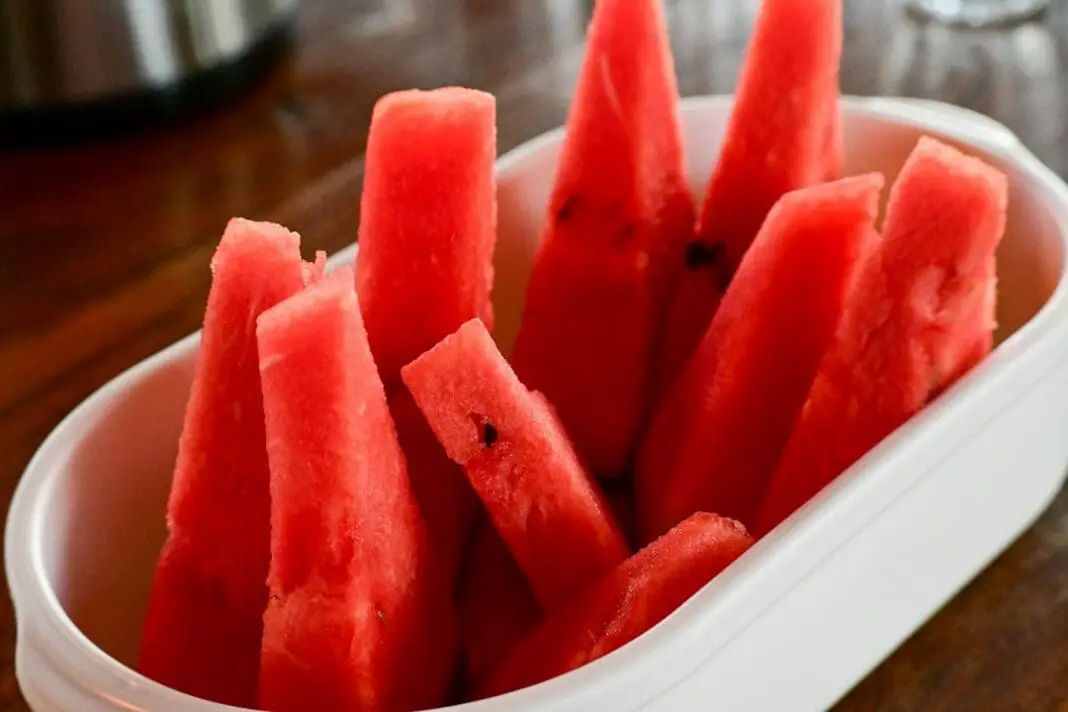
Half a watermelon sits on a dinner plate on the middle shelf, cut side up, no wrap on it, because you’re going to finish it tomorrow. You are not going to finish it tomorrow. That bare plate is the single fastest way to turn a $7 melon into something limp that tastes vaguely like whatever else is in there.
When six storage methods were run side by side in a fridge held at 38 degrees, eight wedges per method, the uncovered plate died first. Day one, the surface was tacky but the fruit was still crisp and sweet. Day two, the wedges had gone leathery and tough on the outside, lost their snap, and tasted stale, like they’d soaked up the air around them. Meanwhile, the same watermelon sealed in an airtight glass container was still crisp, juicy and full-flavored on day eight.
Cut Melon Soaks Up Everything Around It
Watermelon is 92% water, and once you slice through the rind, that exposed flesh behaves like a sponge. It gives up moisture and flavor to the air, which is why an uncovered wedge dries out and goes bland. It also picks up odors from its neighbors. Leftover garlic, an open container of fish, a wedge of funky cheese: all of it ends up in your dessert.
Cubes sitting in a bowl under a loose sheet of plastic wrap aren’t much better. That setup is good for one to two days before the texture starts going. The seal is the whole job.
The Colander Trick Is A Waste Of Shelf Space
Setting the melon in a colander over a bowl so the juice drains away, then tenting plastic wrap over the top, sounds clever. It failed by day three. About two teaspoons of liquid collected in the bowl, the wedges turned squishy all the way through, the exteriors were wrinkled and leathery, and brown spots showed up on the rind. It also ate an entire shelf’s worth of room for nothing. Of all the common storage mistakes, this is the one that costs you the most fridge real estate.
An Airtight Glass Container Buys You Eight Days
Glass containers with tight-fitting lids outperform plastic wrap and open bowls, because they stop moisture from escaping and stop flavors from getting in. In testing, the flesh and rind showed no signs of spoilage until day nine. A heavy zip-top bag laid flat did just as well through eight days, then turned slightly slimy on day nine, but a floppy bag full of melon juice is miserable to stack and you’ll be shoving other food around it all week. Rigid containers slide under and over everything else.
One caveat on the airtight container: cut watermelon keeps releasing liquid, and sitting in that pool turns the pieces soggy. Drain it every day or two, or lay a paper towel in the bottom of the container to soak it up. Quality still slides after about five days even in the best setup, so eight days is the outer edge, not the plan.
Two Hours On The Counter Is The Entire Budget
Cut fruit belongs back in the fridge within two hours, and within one hour if the room or the yard is above 90 degrees. That’s the standard line across food safety guidance, and the FDA classifies cut melons as Time/Temperature Control for Safety foods, meaning the temperature clock actually matters with them.
Melon that sat out overnight, which usually means six to ten hours between dinner and breakfast, goes in the trash. Sticking it in the fridge in the morning does not reset the clock. Same rule for the plastic clamshell of pre-cut chunks from the grocery store: if it rode around in a warm car for an hour or two, it isn’t worth saving. And a lid on the container while it sits on the counter changes nothing except keeping the flies off.
Wash The Rind Before The Knife Goes In
Watermelons grow lying on dirt, then get stacked in bins, then get handled by strangers in a store display. Whatever is on that rind gets picked up by the blade and dragged straight through the flesh, into every single slice. Rinse the whole melon under running water and scrub it with a clean produce brush first. It takes twenty seconds.
The rest of the prep is basic and people skip it anyway. Wash your hands with soap for at least 20 seconds. Use a clean, sturdy cutting board on a stable surface and a sharp knife with a long blade. Do not reach for the board or the knife you just used on raw chicken without washing and sanitizing them.
Your Fridge Is Probably Running Warmer Than You Think
Cut watermelon wants a fridge at or below 40°F (4°C). Restaurants hold sliced watermelon at a maximum of 41°F (5°C). A $6 fridge thermometer settles the argument, because plenty of home units drift warmer than the dial claims.
Placement matters almost as much. A shallow sealed container chills faster than a deep bowl. Keep it on a shelf, not in the door, where the temperature swings every time somebody grabs the ketchup. Store it on a middle or lower shelf, above any raw meat, and don’t cram the fridge so full that air can’t move. Under food handler guidance, you eat cut watermelon within 3 to 4 days for the best quality.
Leave The Rind On Your Wedges
If you’re storing big sticks or wedges rather than cubes, keep the rind attached until you’re ready to eat. It shields the flesh from drying out at the edges. Wrap those wedges tightly in plastic or beeswax wrap for a real seal, and expect one to three days of good eating, since cut faces dry out faster than sealed cubes do. A sealed container of cubes runs two to four days.
Don’t Refrigerate The Whole Melon At All
An uncut watermelon does not belong in your refrigerator. The National Watermelon Promotion Board puts ideal storage between 50 and 59°F, with 55°F as the sweet spot, and a whole melon keeps 7 to 10 days at room temperature. Push it colder and you wreck it: after two days at 32°F, watermelons develop an off-flavor, become pitted and lose color. Actual freezing breaks the rind down and leaves the flesh mealy and mushy. The 32 to 45°F range is the danger zone for chilling injury, and that damage doesn’t reverse.
A cool pantry, a basement or a shaded corner of the counter is the right spot. Above 75°F, a whole melon starts going downhill within about five days. One exception: if you bought it out of a refrigerated case, keep it cold rather than letting it warm back up. Also keep it away from apples, bananas, tomatoes and stone fruit, which give off ethylene and speed things along.
Freeze It Before It Turns, Not After
Nobody finishes a whole melon in four days. Cut what’s left into cubes or scoop it into balls, and take the rind off and pull the seeds out first, because both go rock-hard in the freezer and become almost impossible to deal with later. Spread the pieces in a single layer on a baking tray, freeze until solid, then move them into zip-top bags or airtight containers. Frozen that way, cut watermelon lasts a year.
Thawed, it’s a different food. All that water melts out and you’re left with something closer to puree than fruit. Don’t plan on snacking. Plan on slushies, smoothies, juices, or granita pulsed in the food processor.
When To Stop Eating It
Three to five days is the realistic window for cut watermelon in the fridge, and the melon itself decides where in that range you land. Shelf life testing done for foodservice found a 36-count watermelon still edible at day 7, while 45- and 60-count melons were still edible at day 4. The 36-count had been received refrigerated and the others came in at ambient temperature, which is a decent argument for keeping your melon cold from the moment you buy it.
Toss it if the flesh has lost its bright red or rich pink color, if you see brownish-black spots, mold or slime, or if it smells sour, fermented or just funky. Taste is the last check: sour, or fuzzy on the tongue, means done. Soft and mushy on its own isn’t necessarily spoiled, it’s usually just moisture loss, and that batch is better blended than eaten with a fork. Write the cut date on the container with a marker, because if you can’t remember when you sliced it, you’ve already answered the question.
The verdict is boring and it works. Wash the melon, cut it, get it into a sealed glass container with a paper towel in the bottom, put it on a middle shelf in a fridge you’ve actually checked with a thermometer, and date the lid. That’s eight days of melon that still snaps instead of two days of leathery wedges on a plate that smell like your fridge.
