

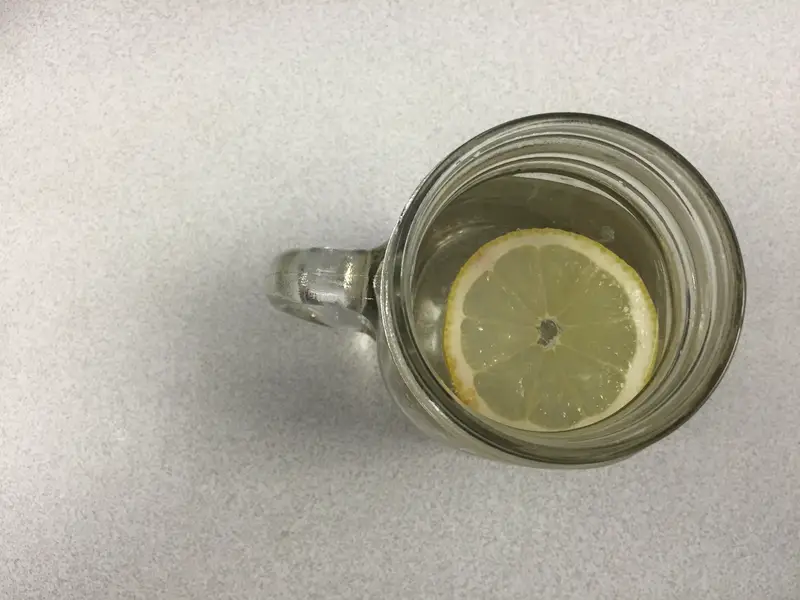
Your server sets down a glass of ice water you never ordered, and there’s a lemon wedge hooked over the rim you never asked for either. It costs the restaurant a few cents. It costs you nothing. It’s also the only thing on your table that nobody back there is treating like food.
When researchers pulled 76 lemon wedges off water and soda glasses at 21 different restaurants and swabbed them, 69.7% produced microbial growth from the rind, the flesh, or both. Twenty-five different microorganisms turned up across the samples, bacteria and yeasts included. The work was published in the Journal of Environmental Health in December 2007 and co-authored by Anne LaGrange Loving, an assistant professor of science at Passaic County Community College.
Seventy Percent Of The Wedges, Rind And Flesh
The samples were collected across 43 separate visits, so this wasn’t one bad shift at one bad diner. The mix included bacteria and yeasts, the kind that usually travel on hands and skin. Both surfaces of the fruit came back positive, which matters because plenty of people assume the peel takes the hit and the juicy part stays clean.
The other assumption the study knocked down is the one about acid. Lemon juice has a reputation as a natural cleaner, and diners lean on it. The authors wrote that “although lemons have known antimicrobial properties, the results of our study indicate that a wide variety of microorganisms may survive on the flesh and the rind of a sliced lemon.” A wedge sitting in cold water is not sanitizing itself, and it isn’t sanitizing your glass either. Anyone telling you the citrus takes care of the problem is repeating restaurant folklore, not science.
A Lemon Is A Garnish, Not An Ingredient
Nothing about the way a restaurant handles lemons resembles the way it handles chicken. They show up by the case, and whether they get a proper wash before slicing depends on the kitchen. Someone cuts them fast during prep, the wedges go into an open container at the bar or the server station, and then they get grabbed over and over for the rest of the shift by whoever needs one.
Gloves and tongs are supposed to be involved. An undercover report commissioned by ABC News in 2012 found employees picking up lemon wedges with bare hands. The washing step can be just as loose. NYU microbiologist Philip Tierno has said that in his experience restaurants often rinse lemons without scrubbing them, which leaves whatever is on the peel more or less where it was. That’s the whole problem with garnish status. Nobody’s inspection checklist is built around a decoration.
Wet Lemons Are The Worst Version Of This
A dry wedge in a bin is one thing. A damp wedge is another. In a 2017 Clemson University study, volunteers coated their hands with E. coli and then handled whole lemons. The bacteria moved onto wet lemons 100% of the time, against about 30% for dry ones.
Now think about where the wedge actually lives. It’s been sliced, stored cold, and handed off at a bar where somebody is pouring drinks, wiping the counter, and running an ice scoop, all in the same three feet of space. Then it gets hung on a glass that’s already sweating. Everything in that sequence is moist.
The Wedge Rides On The Exact Spot You Drink From
Half the time the lemon never makes it into the water at all. It gets notched onto the rim, meaning the cut fruit sits directly against the strip of glass your mouth is about to land on.
There’s no step after that. A steak gets cooked, a soup gets simmered, and mistakes made earlier in the process get dealt with by heat. A ready-to-eat garnish gets nothing. Whatever happened to it during prep is what arrives at the table.
You’re Basically Steeping The Peel
Drop the wedge in and you’ve made a very weak tea out of a lemon rind. Citrus is one of the crops most often carrying residue from postharvest fungicides, the stuff sprayed on to keep fruit from molding between the grove and the grocery truck, and it concentrates in the peel rather than the pulp.
Researchers have actually measured how much of that migrates out of lemon peel and into everyday drinks and soups. The measured amounts came in under regulatory limits, so this is not a five-alarm situation. It is, though, one more argument for squeezing the juice and leaving the rind out of the glass instead of letting it float there through an entire meal.
One Test Found Human Waste On Half The Wedges
That same ABC investigation swabbed tables, menus, shakers and more at 10 restaurants in three states, and half of the lemon wedges tested came back tainted with human waste. The testing was run by Philip Tierno, a clinical professor of microbiology and pathology at NYU Langone Medical Center, who has looked at restaurant lemon wedges more than once and keeps getting similar results: traces from respiratory secretions, skin, and fecal waste, turning up organisms like E. coli and staph on the wedges. His team did not test for viruses such as norovirus.
Tierno is not telling anyone to panic about it. Talking to HuffPost about his findings, he said the usual course will probably result in no infection, but that there is a possibility, and added that you can’t live in a bubble. His own reasoning is that most people’s defenses handle it. That’s an honest answer, and it’s more useful than either extreme.
What The Study Never Actually Proved
The 2007 paper has been passed around the internet for years with headlines that go well past what it found, and the authors were blunt about the gaps. They didn’t count how many microbes were on each wedge. They couldn’t pin down where the microbes came from, and they listed several possibilities: an employee’s fingertips, anyone else who handled the fruit along the way, or spores on the lemon or the knife.
They also checked whether anyone had ever gotten sick from this. “An extensive search of the literature yielded no reported outbreaks or illnesses attributed to lemon slices in beverages,” the study says. That’s still the case. Lemons aren’t even unusual in a dining room. Tierno’s own swabbing has turned up similar germs on menus and salt and pepper shakers, and he figures limes and cherries are no different. The honest read is that a small sample of lemons from a handful of restaurants shows how easily a ready-to-eat garnish gets contaminated during handling, not that every wedge in America is a problem.
Buffet Lemons Are Their Own Category
Sit-down service at least involves one server and one pair of hands. A buffet line puts the lemon slices in an open bowl next to the mint, the herbs and the edible flowers, sitting out at room temperature while every guest in the room walks past and reaches in.
Those garnish bowls exist to make the spread look good. Cut lemons left out warm are a problem too: in that Clemson study, E. coli on sliced lemons multiplied over a day at room temperature and dropped off in the fridge. If you’re skipping the lemon anywhere, skip it at the buffet.
How To Get The Lemon Without The Rind
Ask for the wedges on the side. Squeeze the juice into your water, set the spent rind on a napkin or a bread plate, and don’t let it swim in your glass for the next forty minutes. Squeezing rather than steeping cuts down your exposure, though Tierno points out even the flesh can carry germs, and it takes no extra effort on anybody’s part.
If lemon water is your default order, bring your own. Crystallized lemon packets like True Lemon dissolve into a glass and travel in a bag. So do 2.5 ounce bottles of ReaLemon juice. Neither tastes exactly like fresh fruit, but both put you in charge of what’s going in the glass.
My verdict: order the water plain. You’re not being charged for the wedge, and you’re not getting much for it besides a flavor you can add yourself from a lemon you washed with a knife you cleaned. A garnish that arrives unwashed, gets sliced in bulk, sits in an open bin, and then rides in on the rim of your glass is the one item in the restaurant that nobody is really answerable for. Free is a fine price for a lot of things. It’s a bad reason to accept the least supervised piece of food in the building.
