

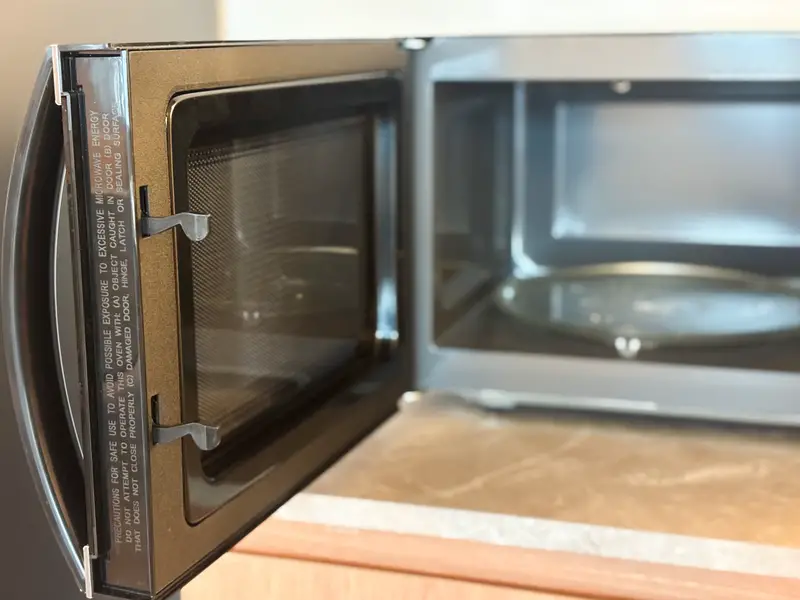
A mug of tap water goes in the microwave for 90 seconds. It comes out looking perfectly still. No rolling bubbles, no rattling, barely any steam. That calm surface is the whole problem. Water heated in a clean cup can climb past its boiling point without ever boiling, and the second you lift the mug or stir in a spoonful of instant coffee, it can blow straight up out of the cup.
The Food and Drug Administration says superheating happens when water is heated by itself in a clean cup, and spells out what comes next in plain language: “If super-heating has occurred, a slight disturbance or movement such as picking up the cup, or pouring in a spoon full of instant coffee, may result in a violent eruption with the boiling water exploding out of the cup.”
Warnings about this have been bouncing around in forwarded emails since 1999, and the physics behind them holds up, even though it takes close to perfect conditions to produce a serious eruption. Most people will heat water in a microwave their entire lives and never see it happen.
Still Water Is Not Cool Water
A stovetop burner pushes heat in from one direction, which sets up currents in the pot. The hot metal surface also kicks off bubbles, and those bubbles carry heat away as they rise, keeping the water honest at 212 degrees Fahrenheit. A microwave does none of that. It works from every direction at once, exciting molecules to vibrate against each other so the friction makes heat, while the mug itself usually stays cool.
Without a hot surface or a current to start bubbles, there is nothing to trigger boiling. The water sits slightly above its boiling point with no nucleation sites where bubbles can form, and it keeps absorbing energy and keeps climbing.
Glass is the worst offender because a glass surface is essentially flawless, with no pits or scratches for a bubble to grab onto. Mild superheating in a clean glass measuring cup is surprisingly common. That little fizz you get when you drop cocoa powder or a tea bag into microwaved water is exactly what it looks like. Severe superheating is much rarer, because scratches, mineral deposits and general kitchen grime usually give the water somewhere to start boiling first.
The Trigger Is Almost Always Your Own Hand
Superheated water sits there waiting for a reason to boil. Picking up the cup is enough. So is dropping in a spoon. Instant coffee or drink powder is worse, because the granules carry thousands of microscopic air bubbles into the liquid at once, and each one swells into a steam bubble. The result is a surge of scalding froth, the same way ice cream erupts in a glass of root beer, except violent enough to throw hot water into the air.
There is no way to look at a mug and know. The FDA notes that the problem occurs when water is heated by itself in a clean cup, and that adding the coffee or sugar before heating cuts the odds way down. A quiet surface tells you nothing about the temperature underneath.
The Burns Are Real
The FDA has received reports of serious skin burns and scalding injuries around people’s hands and faces after superheated water erupted out of a cup.
A 2016 study in the Journal of Trauma and Acute Care Surgery used 11 years of national emergency department data to estimate 10,902 microwave-related burns in children aged 12 months to 4 years. In two-thirds of cases the child had reached the microwave’s contents on their own, and water was the most common cause of the scalds.
A Wooden Coffee Stirrer Solves It
Drop a wooden chopstick, a toothpick or a coffee stirrer in the mug before you hit start. The grain of the wood is rough and porous, which gives bubbles somewhere to form and gather, so the water boils the way it is supposed to instead of quietly stacking up heat. The USDA’s own advice is to leave a microwavable spoon in the vessel while it heats, which does the same job. It might not have been necessary anyway, but it costs you nothing.
The second habit worth picking up: leave the cup sitting inside the microwave for a couple of minutes after the timer goes off. It works because the danger window is the moment of disturbance. Letting the water calm down and shed some heat before your hand ever touches it removes the trigger.
Your Mug Matters More Than Your Microwave
Smooth-walled containers are the ones that set this up. Glass and glazed ceramic are the slickest surfaces in your cabinet, since a glaze is itself a coat of glass, which makes the nice clear measuring cup the likeliest to superheat. Water quality plays a part too, since minerals and impurities give bubbles a foothold that filtered water in a spotless glass does not.
Time is the other lever. Heating in short bursts, with a stir between each one, keeps the temperature under control. Long single runs are what get people.
Even When Nothing Erupts, The Tea Is Worse
Microwaved water does not heat evenly, and there is a number on it. A 2020 study in AIP Advances measured the gap between the top and the bottom of a glass of microwaved water at 7.8 degrees Celsius, or about 14 degrees Fahrenheit. A kettle heats from the bottom, so the water rises, circulates and ends up one temperature throughout. Your microwaved mug is layered hot and cold.
That is why microwaved tea tends to taste thin or flat. The tea bag hits water that is not as hot as the surface suggested. Stirring before the bag goes in fixes most of it, and if your microwave has a turntable, setting the cup near the edge rather than dead center keeps it from parking in a cold spot the whole time.
What The FDA Actually Recommends
The agency’s guidance is unglamorous and specific. Read the heating times in your microwave’s instruction manual and follow them. Do not use excessive amounts of time when heating water or liquids. Figure out the time setting that gets water to the temperature you actually want, then use that setting every time instead of guessing.
The agency also advises against heating breast milk or infant formula in a microwave at all.
The Metal Spoon Argument
Appliance makers have their own protocols. A common one is a stirring routine: mix the liquid before you start, pause halfway through to stir again, wait after the timer stops, stir once more, then check the temperature before you drink it. Simple, and it addresses the layering problem and the superheating problem at the same time.
Neff goes further and suggests a metal spoon in the liquid, kept at least 2 centimeters from the oven walls and the inside of the door so it does not arc. The liquid absorbs the energy before it reaches the metal, which is why it works. Most safety guidance still says skip it unless your own appliance manual tells you to do it, because sparks and appliance damage are not worth the convenience.
The Verdict
An electric kettle with automatic shutoff wins outright. It boils water evenly and it tells you when it is done. A pot on the stove gives you the same certainty, because you can watch the bubbles.
If the office kitchenette gives you a microwave and nothing else, do not heat a clean cup of plain water and then reach in. Put the coffee, cocoa or sugar in first. Leave a wooden stirrer in the mug. Run it in short bursts instead of one long blast, and let it sit inside the box for a minute before you pick it up. The odds were never high, but the fix is a piece of wood.
