

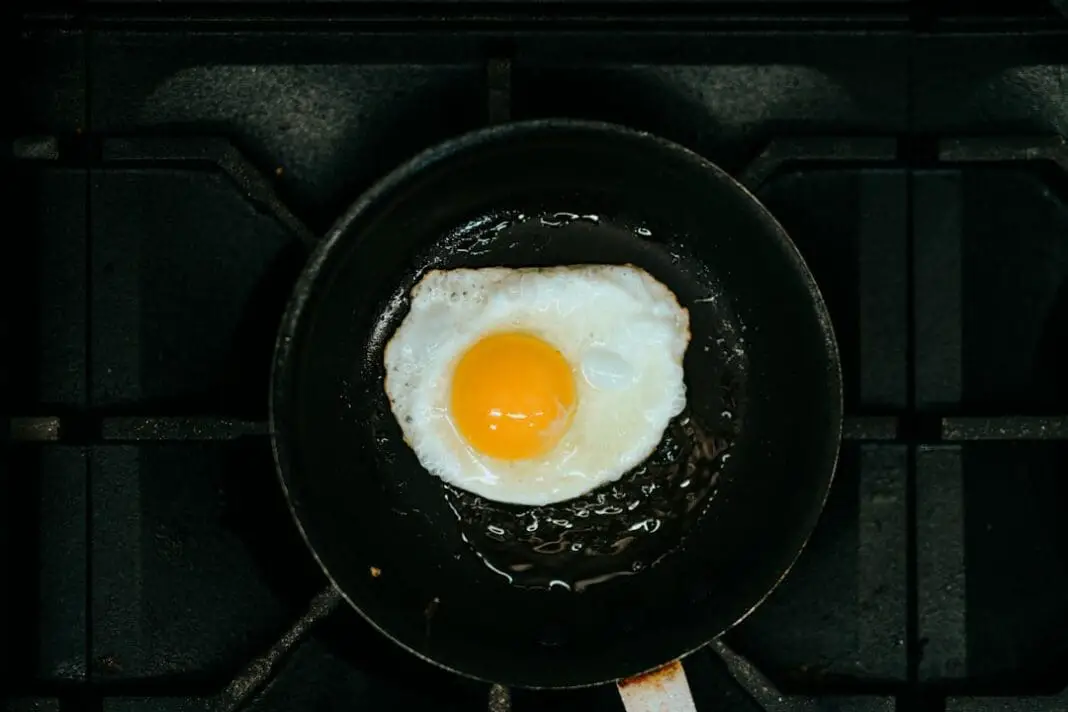
Butter foams in the pan, then it browns, then the milk solids in it start to darken and your egg picks up a scorched edge nobody asked for. The milk solids in butter start browning around 250°F and the butter itself smokes near 300°F, which is barely any heat at all once a skillet gets going. Olive oil hangs on longer, and plenty of good cooks stop right there and never think about it again. Both work. Both also explain why your fried egg has tasted exactly the same every morning since you learned how to make one. The fix is already in your pantry, probably shoved behind the soy sauce: toasted sesame oil. A teaspoon of it in a nonstick pan turns a plain fried egg nutty, savory and a little smoky, and if you eat your eggs over rice, it is not a close call.
Butter Gives Out Before The Egg Is Done
Butter sits somewhere between 300°F and 350°F on the smoke point charts, which puts it near the bottom of the list of things people cook with. Treat that range loosely: smoke point varies with the batch and it is a poor predictor of how a fat actually behaves in a pan. The culprit is the milk solids. They are what brown so beautifully in a pan sauce, and they are also what keep on browning past the point you wanted, right while your whites are still translucent and jiggly in the middle.
You can work around it. Lower heat, more time, a lid to help the top set. But at that point you are managing the butter instead of cooking the egg, and the payoff is a flavor you have already had ten thousand times. Butter is rich and creamy and completely familiar. On a fried egg, familiar is the whole problem.
Olive Oil Makes A Good Egg. It Makes The Same Egg Every Time.
Adam Gallagher, co-founder and recipe developer at Inspired Taste, defends olive oil hard, and his reasoning is sound. “If I’m not using butter, I reach for olive oil,” he said, explaining that it gives lightly crisp edges and a savory finish and helps the whites settle gently without sticking. It also takes more heat than butter does, which encourages browning around the whites. “The hot oil bubbles up around the edges and creates a lacy, golden rim,” he said.
All true. Extra virgin olive oil runs 325°F to 410°F depending on how fresh and how good it is, so it has more room than butter, and its peppery, fruity, grassy character does show up in the finished egg. That is the ceiling, though. Olive oil tastes like olive oil, your brain already knows the answer before the fork gets there, and no amount of technique changes it into something new.
What Toasted Sesame Oil Does To A Fried Egg
Toasted sesame oil is described on flavor charts as deep, toasty and nutty, and that is exactly what lands on the egg. The white picks up the toastiness at the edges where it browns. The yolk stays rich and clean. Together they taste like something you would order out rather than something you scraped together at 7 a.m. in a bathrobe.
The method could not be simpler. Pour a small glug of sesame oil straight into a nonstick skillet, crack in 1 large egg as gently as you can manage, add a pinch of kosher salt, and cook it to whatever doneness you like. Slide it onto a plate, onto toast, or onto a warm bowl of rice.
Rice is where this swap earns its keep. An egg fried in sesame oil and slid over hot white rice, the yolk broken and running down into it, is a Korean breakfast more than a Filipino one, whatever the internet says: silog, the Filipino version, runs on garlic and a neutral oil. Do it once and the olive oil bottle stays in the cabinet on weekday mornings.
Keep The Heat Down, Because This Is Not A High Heat Oil
Here is the one rule you cannot ignore, and it is also the honest caveat on this whole piece. Unrefined toasted sesame oil smokes at about 350°F, which is the same neighborhood as butter. You are not switching for a higher smoke point. You are switching for the flavor. Plain refined sesame oil sits higher at about 410°F and is the better pick if you like your whites blistered and lacy.
Medium-low is the setting. Oils behave differently once they pass their smoke point, and overheated oil goes acrid and bitter, which is a miserable thing to do to a good egg. If the oil is smoking before the egg goes in, pull the pan off the burner, wipe it out, and start over. You have lost ten seconds and a teaspoon of oil.
The Pan Matters As Much As What Is In It
Nonstick, every time. Gallagher makes the point that a good nonstick pan takes the anxiety out of the whole business: “The nonstick pan doesn’t have me worrying about slippage, and I don’t have to use as much fat to keep the egg gliding.” That second half is the one that matters with sesame oil, because a little goes a long way and you do not want a puddle of it.
Pair it with a silicone spatula, which is flexible enough to slide right under the egg without tearing the white. Salt goes on top of the whites, not in the pan. Black pepper or a few torn herbs are welcome. Anything louder than that and you are competing with the oil you just paid for.
The Chili Crisp Version Is Better Than The Plain One
Sesame oil and chili crisp in the same pan is the upgrade. Heat 1 tablespoon chili crisp and 1 teaspoon toasted sesame oil in a small nonstick frying pan over medium-low until it loosens and runs, not until it shimmers, which would put you past its smoke point. Swirl to spread it, then crack in 2 large eggs and season with a pinch of kosher salt. Cook undisturbed until the whites are set, the yolks are still runny and the edges are crisp, 3 to 5 minutes, lowering the heat if things start to burn.
Chili crisp is a spicy, oily, textured condiment built from dried chili peppers, oil, spices and seasonings like sesame seeds or garlic, used all over Chinese cooking on noodles and dumplings. Lao Gan Ma is the most recognizable brand and one of the first to popularize it in China. Scatter a thinly sliced scallion over the top and you have a two dollar breakfast that eats like a restaurant dish. One warning worth printing: sesame is one of the nine major allergens the United States requires to be labelled, so this is not a swap to make for a guest without asking.
Ease Into It If You Are Nervous
Toasted sesame oil is assertive, and if you have only ever used it a few drops at a time in a stir fry, a full teaspoon under an egg can feel like a lot. Cut it with a neutral oil, or even with olive oil, for the first few tries. You get the nuttiness at half volume and you can dial it up from there.
Store the bottle somewhere cool and dark but still within arm’s reach of the stovetop, because a bottle you cannot see is a bottle you never use. If you are frying eggs with it a few mornings a week, you will go through a bottle in a couple of months, which means going rancid is not really something you have to think about.
When A Neutral Oil Is Actually The Right Call
There is one situation where sesame oil is the wrong move, and it is worth knowing. If you are burying the egg under salsa, hot sauce or anything else with a big personality, you want the fat to stay out of the way. Gallagher points to sunflower and avocado oil for that job, noting they have a clean taste and a higher smoke point, so you can cook the eggs a little hotter and still get tender whites with a set bottom, just without the extra flavor.
Refined avocado oil tops out at 480°F to 520°F, among the highest of any common cooking oil, so it will take whatever heat your burner throws at it. Buy it from someone you trust: UC Davis testing found most avocado oil on American shelves was rancid before its best-by date or cut with cheaper oil. Refined sunflower runs 440°F to 450°F. Both are good pans of eggs. Neither is interesting on its own, which is the entire point of using them.
If You Cannot Let Go Of Butter, Buy Ghee
Some people are never giving up that butter flavor, and there is a clean answer for them. Ghee is butter simmered until the milk solids brown and then strained out, which pushes its smoke point up to roughly 450°F to 485°F while keeping the rich, nutty, buttery taste. Eggs are listed among its best uses for exactly that reason.
It costs more than a stick of butter, running roughly a dollar an ounce, in the same range as good avocado oil. For a jar that lasts a year or more on the shelf and never scorches under an egg, that is a fair trade.
The Verdict
Butter burns too early and olive oil, for all its lacy golden edges, gives you the egg you already know. Toasted sesame oil costs a few dollars, lives in the pantry you already have, and changes the dish instead of just cooking it. Keep the burner at medium-low, use a nonstick pan, salt the whites, and put the egg on rice. Add chili crisp the second time.
Toasted Sesame Oil Fried Eggs
Cuisine: Asian2
servings3
minutes5
minutes210
kcalThe nutty, crisp-edged fried egg that will make you forget butter ever existed.
Ingredients
2 large eggs
2 teaspoons toasted sesame oil
1 tablespoon chili crisp (optional)
1 medium scallion, thinly sliced
1 pinch kosher salt
Freshly ground black pepper, to taste
1 teaspoon neutral oil such as sunflower or avocado (optional, for cutting the sesame oil)
2 cups warm cooked white rice, for serving
2 slices toast, for serving (optional)
Directions
- Set a small nonstick frying pan over medium-low heat and add the toasted sesame oil, swirling the pan so it coats the bottom in a thin film. Give it about a minute to warm through. You are looking for a shimmer, not smoke, because toasted sesame oil starts to smoke at about 350°F.
- If you want the chili crisp version, add 1 tablespoon chili crisp to the pan along with 1 teaspoon of the sesame oil instead of the full 2 teaspoons. Heat the two together until the mixture shimmers and smells toasty, then swirl to spread it evenly. Keep the flame low so the chili flakes never darken.
- Thinly slice the scallion while the oil heats, keeping the white and green parts together. Set it next to the stove so it is ready the second the eggs come out. This is the only prep the recipe has, so do not skip it and then scramble for a knife later.
- Crack the eggs gently into the pan, holding the shell close to the surface so the yolks do not break on the drop. Leave a little space between them so the whites do not fuse into one sheet. If a yolk does break, keep going, it will still taste good.
- Season with a pinch of kosher salt sprinkled directly on top of the whites, not in the oil. Add black pepper if you like it. Hold off on any other seasoning, since the sesame oil is doing the heavy lifting here.
- Cook the eggs undisturbed until the whites are set, the yolks are still runny and the edges have crisped, 3 to 5 minutes. Do not poke, nudge or shake the pan. Reduce the heat if the edges are browning faster than the whites are setting.
- For over easy or over hard, slide a flexible silicone spatula all the way under one egg at a time and flip it in one motion. Cook just until the top whites turn opaque for over easy, or a little longer if you want the yolk firm. The spatula matters more than your wrist does.
- Slide the eggs out of the pan onto a plate, a slice of toast, or a warm bowl of rice, scraping any oil and chili crisp left behind right over the top. Scatter the sliced scallion on last. Break the yolk immediately and let it run into the rice.
Notes
- Use toasted sesame oil, not plain refined sesame oil, for the deepest nutty aroma. Plain sesame oil is milder and takes more heat, with a smoke point around 410°F versus 350°F for the toasted kind.
- If the flavor feels too strong on your first try, cut the sesame oil with a neutral oil or olive oil and work your way up over a few breakfasts.
- Keep the bottle in a cool, dark spot within reach of the stovetop. Frying eggs with it regularly means you will finish a bottle in a couple of months, so it never sits around long enough to turn.
Frequently Asked Questions
Q: Can I use regular sesame oil instead of toasted?
A: Yes, and it is actually the better choice if you cook your eggs hot. Plain refined sesame oil has a smoke point around 410°F and a milder sesame flavor, while unrefined toasted sesame oil smokes at about 350°F and tastes deeper and nuttier. Toasted gives you more flavor, plain gives you more room on the burner.
Q: Will the eggs stick if I do not have a nonstick pan?
A: A quality nonstick pan is the recommendation, and the reason is that you need less fat to keep the egg gliding, which matters when the fat is as strong-tasting as sesame oil. Pair it with a silicone spatula, which is flexible enough to slip under the egg cleanly for a flip.
Q: What is chili crisp and where do I find it?
A: It is a spicy, oily, textured condiment made from dried chili peppers, oil, spices and seasonings like sesame seeds or garlic, used across Chinese cooking as a topping for noodles and dumplings. Lao Gan Ma is the most recognizable brand and one of the first to popularize it in China. Most grocery stores now carry a jar in the international aisle.
Q: Is there a fat that gives me butter flavor without butter’s low smoke point?
A: Ghee. It is butter simmered until the milk solids brown, then strained out, which raises the smoke point to roughly 450°F to 485°F while keeping the rich, nutty, buttery taste, and eggs are one of its best uses. It runs about $0.80 to $1.40 per ounce, so it costs more than a stick of butter but lasts a year or more on the shelf.
