

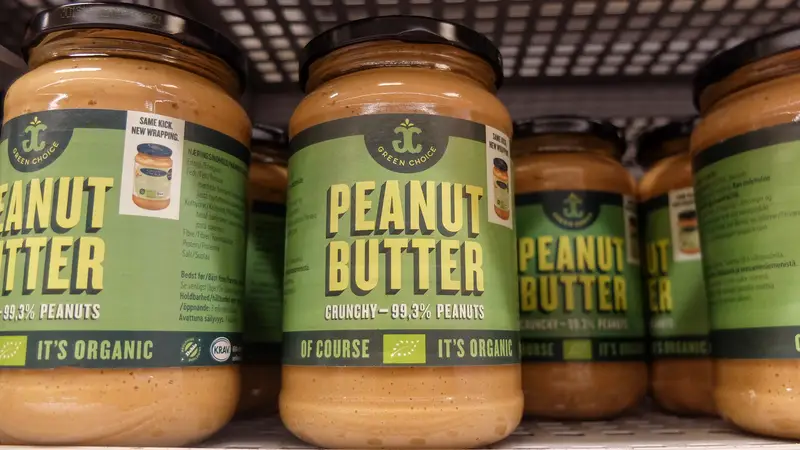
The cabinet directly above the stove is where a lot of American kitchens keep the everyday stuff. Cereal, cooking oil, the peanut butter. It’s within arm’s reach of the toaster, which is exactly why it got the job. That cabinet is also the worst place in your house for a jar of peanut butter. Every time a burner runs, heat climbs straight into the shelf above it, and heat is the one thing peanut butter cannot shrug off.
The Shelf Over Your Range Is Basically A Warming Drawer
Peanut butter wants to sit somewhere between 65 and 75 degrees Fahrenheit. Storage guidance is blunt about the rest of it: keep the jar away from ovens, stovetops and direct sunlight, because that kind of warmth pushes the oils toward oxidation, and oxidized peanut oil tastes rancid. Not spoiled-in-a-dramatic-way. Just flat, bitter, and a little like something you’d use to strip furniture.
Warmth also breaks the texture. Peanut butter is an emulsion, tiny droplets of oil suspended in a mass of ground peanut solids. Get it hot and those droplets start finding each other, the emulsion loosens, and the jar goes runny and slick on top. Runny is the first sign, and off smell is the second. Once a jar has both, it’s headed for the trash.
A Sealed Jar Is Not Protected From Heat
People assume the backup jar is bulletproof because it’s never been opened. The factory seal keeps oxygen out. It does nothing about temperature. That’s why the shelf-life numbers for unopened peanut butter come with a condition attached: six to nine months in a cool, dark place, away from direct sunlight. Store that same jar in the hot cabinet over the range for eight months and you may open a brand-new jar that already tastes stale.
Same logic applies to the shopping trip. A jar that spends a summer afternoon in a parked car gets hot enough for the oils to separate and the flavor to dull. If the jar came home warm to the touch, it isn’t the same jar that left the store.
Jif And Skippy Do Belong In A Cupboard, Just Not That One
Conventional brands are built with added hydrogenated or partially hydrogenated vegetable oils, usually palm or cottonseed, and those stabilizers hold the peanut oil bound to the solids so nothing separates. The USDA’s FoodKeeper database puts an opened jar of conventional peanut butter at three to four months at room temperature. Keep it in a cool, dark cabinet with the lid screwed down and you’re fine.
Don’t move it to the fridge out of caution. Cold locks up those fats completely, and you end up with a block that tears your toast into confetti. Refrigeration does stretch quality further, by some storage guides up to nine months on an opened processed jar, but you’ll be fighting your bread every morning to get it. The trade isn’t worth it unless you bought a warehouse-size tub you can’t finish.
Natural Peanut Butter Is A Refrigerator Item, Full Stop
If your jar says peanuts and salt and nothing else, the pantry is not where it lives after opening. The stir-required stuff, Woodstock and the Trader Joe’s brands among them, has no stabilizers, so the oil rises and the solids sink. Left at room temperature, an opened jar of natural peanut butter holds up for roughly one to two months before the exposed oil turns. In the fridge, that stretches to about four to six months.
Cold does double duty. It thickens the oil so it physically can’t float back to the top, which ends the separation problem, and it slows the chemical breakdown that produces those bitter, stale, paint-like off-flavors. The FoodKeeper guidance says to finish an opened natural jar within four months when refrigerated, which is more time than most households need anyway.
One exception. If you go through a jar in a few weeks, natural peanut butter can ride out its short life in a cool, dark cupboard without any drama. It’s the jar that sits around for months that gets punished.
Turn The Jar Upside Down
The best trick for people who refuse to refrigerate natural peanut butter costs nothing. Oil rises, so store the jar upside down and the oil has to travel down through the peanut solids to get to the top. Flip it right side up when you want a sandwich and the oil is already distributed through the whole jar. Flipping it every few days keeps everything moving and keeps the spread smooth.
Check the lid before you commit to this, obviously. A loose ring plus an upside-down jar equals a puddle in the cabinet.
The Bowl Method That Ends Stirring For Good
Stirring a full, narrow jar of natural peanut butter with a butter knife is how counters get ruined. Do it once, properly, instead. Empty the whole fresh jar into a big mixing bowl, then work the oil back into the solids with a heavy fork, a hand mixer, or a food processor until it’s uniform. Scoop it back in, cap it, and put it straight in the fridge.
The cold sets that mixture in place. Every scoop after that comes out cohesive and scoopable, and you never stir the jar again. Whatever you do, don’t pour off the oil pooled on top to skip the stirring step. That oil carries a chunk of the flavor, and dumping it leaves you with a dry, chalky jar.
Cold Peanut Butter Is Fixable In Ten Seconds
The main argument against the fridge is spreadability, and it’s a real one. Refrigerated peanut butter goes stiff enough to shred a slice of sandwich bread. The fix is to scoop your portion into a small microwave-safe dish and hit it for five to 10 seconds. It comes back silky, and the rest of the jar stays cold and stable. Letting the portion sit out for a few minutes works too if you’re not in a rush.
Baking has its own rules. Room-temperature peanut butter blends into cookie dough and frosting far better, so pull it out ahead of time. No-bake stuff is the reverse: cold peanut butter is thicker, and thicker is what holds protein bites and no-bake bars together. And if you make peanut butter shakes, keep a few scoops in the freezer. Frozen peanut butter breaks apart in a blender instead of gumming up the blades, and it doesn’t water down the shake.
The Freezer Is For Bulk Buyers
Bought four jars because the price was good? Peanut butter freezes for up to six months without much loss, and past that it starts giving up flavor. Use an airtight container, or keep it in the original jar with the excess air pressed out. Thaw it in the fridge overnight, or on the counter for a few hours, then stir it before you use it.
An unopened jar of natural peanut butter parked in the fridge is another good move for stockpilers. Chilled and sealed, it holds a year or more instead of the three months or so it gets in a cupboard.
Where Your Climate Changes The Answer
Labels tell you to keep it cool and dry, which is easy advice to give and harder to follow in Phoenix in July or a Gulf Coast kitchen in August. In a hot, humid house without much air conditioning, the fridge is the smart default no matter which type you bought. Humidity is part of the problem, not just temperature, so a damp cabinet is a bad cabinet.
Keep it in the jar it came in. That container was designed for the job. If you have to transfer it, use something airtight in glass or stainless steel rather than plastic, which picks up odors and flavors.
Two Habits That Matter More Than The Shelf
Never double-dip. A knife that already went into the jam and then goes into the peanut butter drags moisture in with it, and moisture is what turns a low-water spread into a spoiled one. Grab a clean utensil, every single time.
Then screw the lid down hard. Air exposure is what dries the surface out and dulls the flavor, and a lid left half-turned undoes everything else you did right. A jar that’s gone past it will tell you: hardened and dry on top, a sour or bitter edge to the taste, or a smell that’s either gone flat or turned sharp.
The Verdict
Move the jar off the shelf above the stove and out of the cabinet next to the toaster. Put it low, in the dark, in the coolest cupboard you have, and give it a lower shelf if you have the choice. If it’s Jif, Skippy or Peter Pan, that’s the whole assignment, and you’ve got three to four months once it’s open. If it’s the kind you stir, stir it once in a bowl and let it live in the fridge, where it’ll stay smooth and taste like roasted peanuts for months instead of weeks.
