

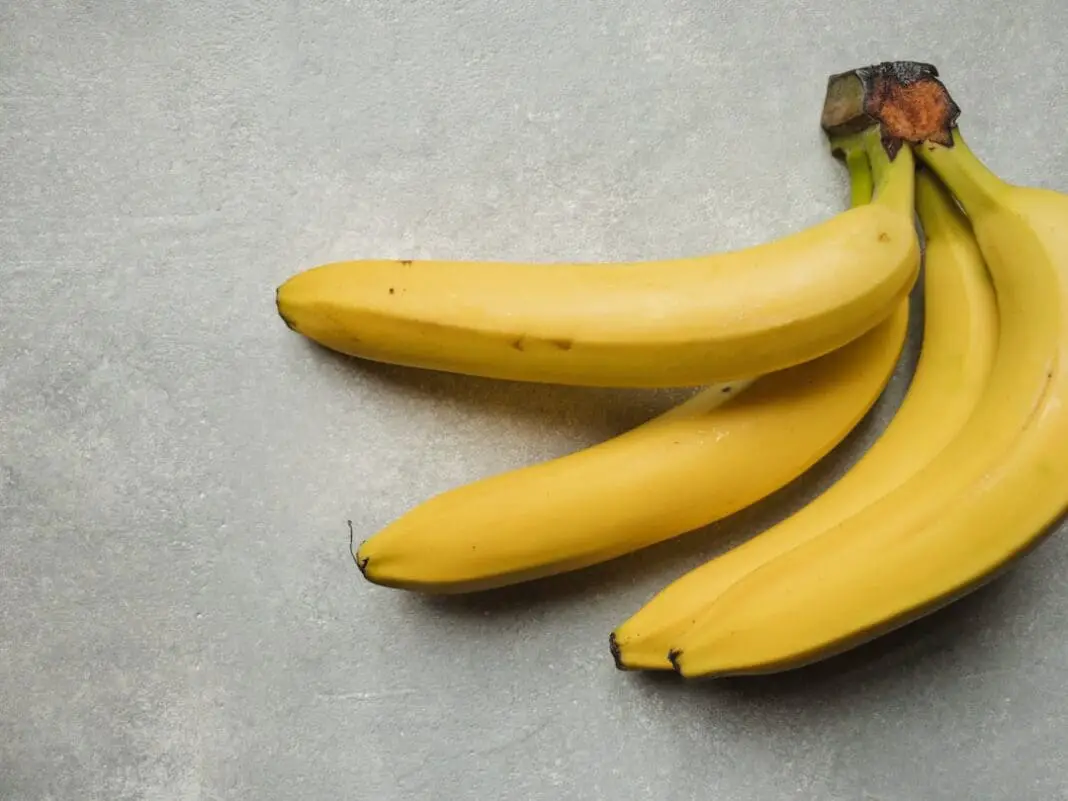
You bought the bunch on Sunday. Firm, yellow, a little green at the tips, enough for a week of cereal and lunchboxes. By Thursday the tips are black, the whole thing has gone leopard print, and you are reading banana bread recipes you never planned to bake. The fix costs about a nickel: pull the bananas apart, tear off a small square of plastic wrap, and seal it tight over each cut stem. It buys a day or two, no more. The real gains come from what you do next.
The Stem Is Where The Trouble Starts
“Bananas ripen because they release a natural gas called ethylene,” certified culinary scientist Jessica Gavin told Reader’s Digest. “Most of that gas comes from the stem where the bananas connect.” Postharvest researchers measure ethylene from the whole fruit rather than by part, so treat the stem figure as her read rather than a settled one.
That gas is not just a byproduct. Food science consultant Ed McCormick describes ethylene as a communication signal between fruits, and says that when it builds up, it speeds ripening. In a bunch sitting on your counter, the effect feeds itself: one banana softening pushes its neighbors along, and they push back.
Covering the stem interferes with that signal. Wrapping “slows down the ripening signal,” McCormick says. “Think of it as turning the volume down, not turning it off.” Timing decides whether it does anything at all. Wrap while the fruit is still firm and green or yellow. Once browning has started, McCormick says much of the ripening is already underway inside the peel, and a scrap of plastic will not walk it back.
How Many Extra Days You Actually Get
McCormick puts the honest number at one to two additional days, which he calls “a modest but meaningful difference, especially if you’re trying to stagger ripeness across the week.”
The bigger claims come from doing more than one thing. Kristen, the cook behind The Frugal Girl, tells people to separate the bananas at the stems and wrap each top stem. Her own verdict on the whole category is worth quoting: she does not feel any of them are silver bullets.
Side-by-side testing suggests the version most people try is the weak one. A chef who ran nine methods at once on a single batch wrapped the bunch as a unit and got bananas that looked, smelled, felt and tasted virtually identical to the ones left bare on the counter. Plastic wrap finished fifth out of nine. A separate six-day test found stem wrapping tied with a banana hook in every way it measured, and put both behind foil and a sealed produce bag. In the nine-method run, wrapped bananas scored the same as the ones nobody touched.
Split The Bunch Or Skip The Trick
Wrapping a crown while the bananas are still attached is where the hack usually fails. The fruit itself gives off ethylene, not only the crown, so sealing the top of an intact bunch leaves most of the gas circulating right where it always was.
There is a second problem with the bunch. If one banana in the group is riper than the rest, its ethylene reaches the others whether the crown is wrapped or not. One bad apple, same idea.
Pulling them apart helps on its own. Gavin says separating the bananas improves airflow, which slows ripening a little further. So do both: break the bunch, wrap each stem individually, and lay them out so they are not pressing against each other. It is maybe twenty seconds of work for the whole bunch.
The Fridge Is What Turns Days Into Weeks
Plastic wrap slows the clock. Cold stops it. “When the bananas are the perfect ripeness, put them in the fridge,” Kristen says. “The skin will turn brown, but the actual banana’s ripening will be paused.” Done at the right moment, that can carry a bunch to around two weeks.
Refrigerating a fully ripe banana buys a few days more, up to about a week, and the blackened peel is enzymatic browning set off by the cold rather than rot. In a controlled six-day comparison, bananas moved to the fridge at their peak held that ripeness for a few days and up to a week.
Do not do it early. A green banana put in the fridge suffers chill injury: the skin blackens and the flesh comes out starchy and waxy, and it never gets sweet. Let it yellow on the counter first. If your bananas are already going brown, Gavin says the stem trick will not do much at that point, so pop them in the fridge for a few extra days or use them for baking.
Freeze Them Peeled, Never In The Peel
Peeling before freezing is the whole ballgame. Bananas frozen whole in the skin come out impossible to peel and need roughly 30 minutes of thawing before you can fight the jacket off.
Freeze them whole or in pieces in an airtight container, or lay slices on a wax paper lined baking sheet, freeze, then transfer. Frozen bananas stay usable for two to three months. Freezing ruptures the cell walls, so the texture goes soft, which is exactly what you want for smoothies and banana bread and exactly what you do not want in cereal.
Freeze ripe ones only. Cold halts ripening, so a green banana that goes into the freezer comes out tasting unripe and starchy. To thaw, move them to the refrigerator overnight or set them in a bowl on the counter.
Your Bananas Were Already On The Clock
Cavendish bananas, the ones in every American grocery store, are harvested completely green and shipped at 13 to 14 degrees Celsius, since colder causes irreversible chill damage. At the other end they go into purpose-built ripening rooms and get 100 to 150 parts per million of ethylene for 24 to 48 hours, which produces that uniform yellow the shelf wants.
From there McCormick’s stages put you four to seven days from the first brown speckles. The full run from store to bin is about seven to ten days if you do nothing.
McCormick breaks the counter stages down like this: green for two to four days while starches convert to sugars, yellow and firm for two to three days, fully yellow with brown speckles for one to two days at peak sweetness, then overripe for one to three days before the texture goes. Gavin says the whole slide from green to overripe usually takes five to ten days.
The Methods That Flopped
Standing a banana stem-down in a bowl of water, the one that keeps circling social media, was the worst performer in the nine-method test. Within a couple of days the stem end split open, and the bottom half decomposed into a slimy mess that smelled rancid. It got an F minus and went in the trash.
Hooks earned a C minus. The hanging bananas were sweet and tender but no less ripe than the ones lying on the counter, and the stems dried out, leaving the tip of the fruit dry and inedible. Aluminum foil over the crown scored a C, coming out slightly darker than the untreated banana with basically the same aroma, texture and flavor.
Two habits actively speed things up. Leaving bananas sealed in a plastic bag at room temperature traps the gas around the fruit, and parking the bunch in a fruit bowl next to apples, avocados or pears surrounds it with more ethylene from the neighbors.
What To Buy At The Store
Greener bananas hand you more control, because they take longer to start producing ethylene in earnest. If you want them spread across the week instead of all peaking Wednesday, grab a mix of ripeness levels or a smaller bunch. Organic bunches sometimes show up greener simply because producers ship them earlier, which reads on your counter as extra days.
The plastic-collared bunches in the produce aisle are doing the same job you would do at home. Gavin says some stems are wrapped to slow ethylene release and delay ripening during transport and display. It is not a quality mark, and a wrapped bunch is not a better banana.
Stores could wrap everything and choose not to. McCormick says doing it at scale would raise labor, material costs and plastic use, and that retailers actually want bananas ripening at predictable rates to keep sales moving.
Does It Work On Anything Else
The same principle applies to other ethylene producers, including avocados, apples and pears, though McCormick says the effect is less noticeable because bananas release such a concentrated amount from the stem. Gavin is blunter: the trick works best for bananas, and wrapping the stems of other fruit does not target the gas the same way.
For everything else in the bowl, separation and airflow are the useful moves.
The Routine Worth Copying
Break the bunch apart the minute you get home. Wrap each stem tight with a small square of plastic wrap while the fruit is still firm. Keep them at room temperature, out of direct sun, and nowhere near the apples.
The day they hit the ripeness you like, move them to the refrigerator and ignore the black peel. When one goes past eating, peel it, break it up and freeze it before it turns into a countertop puddle.
Wrapping the stems alone is a one or two day win at best, and in two side-by-side tests it was not measurable at all. Anyone promising weeks from plastic wrap by itself is overselling it. The weeks come from the sequence: counter, then fridge, then freezer, with the wrap buying you enough runway to get the timing right.
